
The Injury Nobody’s Measuring
Most people are told to rest after a brain injury and wait for the fog to lift. But for the patients still struggling months or years later, rest isn't enough — and Dr. Justin Dearing explains why. In this article, Dr. Dearing reframes brain injury as a systems-level autonomic injury that cascades across blood flow, heart rate, digestion, stress physiology, and cognitive function all at once. Drawing on The Dearing Clinic's multi-omics diagnostic approach — including qEEG brain mapping, eye movement assessment, autonomic stress testing, gut diagnostics, and more — he outlines why passive recovery fails so many patients and what active, measured, sequential intervention actually looks like. At the center of it all is a compelling case study: a former professional football player initially labeled with early-onset dementia whose cognitive decline turned out to be multi-system dysregulation — measurable, correctable, and ultimately reversible. If you or someone you love is still symptomatic after a brain injury and has been told their imaging looks fine, this is the article that reframes everything.
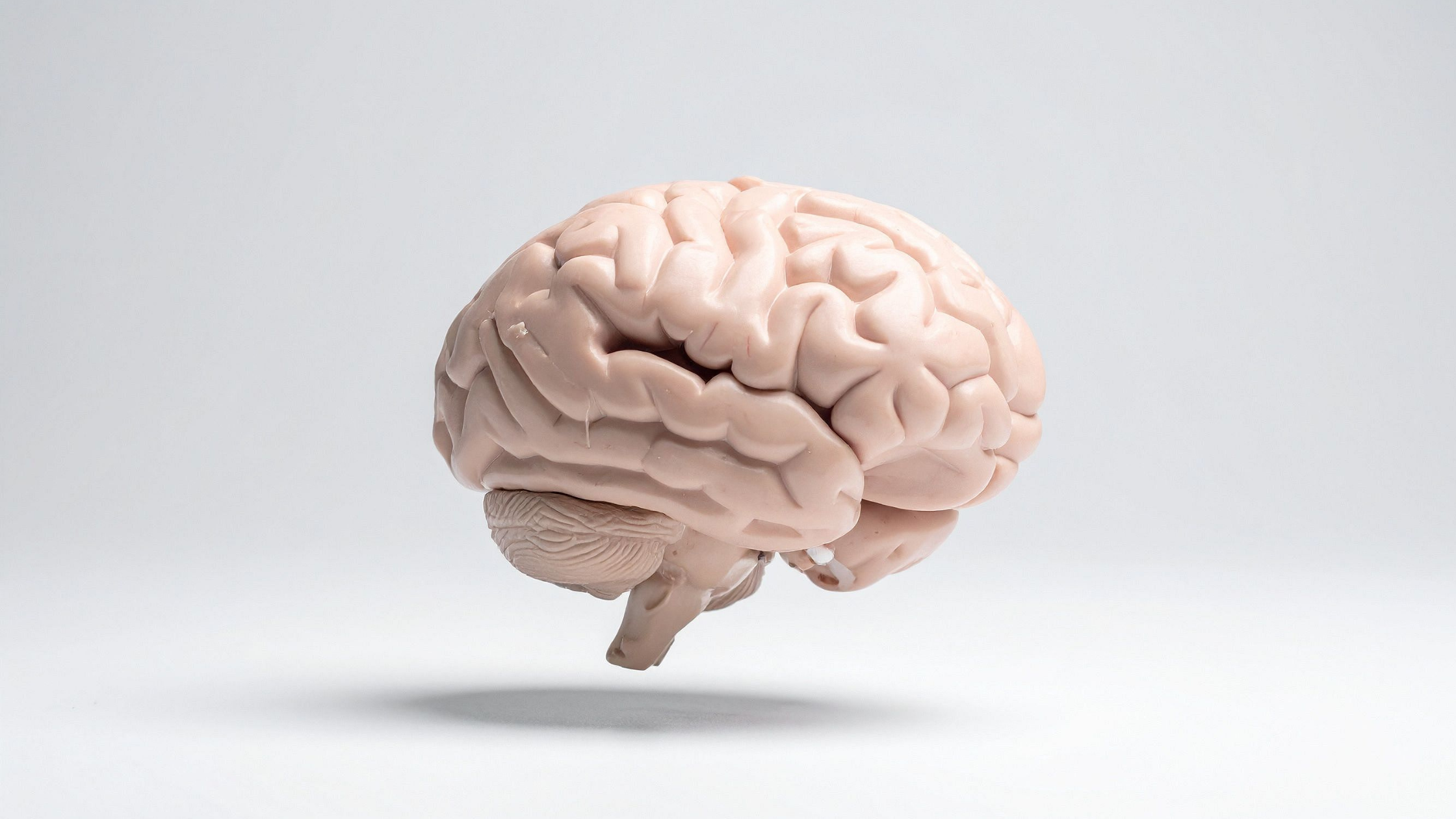

The Injury Nobody’s Measuring
Key Points:
- Brain injury is an autonomic systems injury — not just a structural brain problem. It disrupts blood flow, heart rate, digestion, stress physiology, and cognitive function simultaneously.
- "Rest and wait" fails chronic sufferers. Patients still struggling months or years post-injury need active, measured, sequential intervention — not more time.
- You cannot fix what you don't measure. The Dearing Clinic uses a full diagnostic stack: qEEG, VOG oculography, posturography, ANS stress testing, metabolic, gut, and immune panels together.
- The Valsalva ratio is a critical but underused metric. It directly measures vagal brake capacity and changes treatment sequencing, prognosis, and intervention selection.
- The eyes reveal the injury. VOG oculomotor testing maps brainstem, cerebellar, and cortical damage that structural MRI misses entirely.
- Neuroinflammation keeps the alarm system locked on. The locus coeruleus and amygdala drive cardiovascular dysfunction through hardwired pathways — not just emotional anxiety.
- Recovery is sequential and measurable. Gut-immune stabilization comes first, then autonomic retraining, then neurofeedback — in a specific physiological order that can be tracked objectively.
A Different Conversation About Brain Injury
March is Brain Injury Awareness Month, and across the country the conversation will center on helmets, sideline protocols, and the importance of rest. Those things matter. But they are not the conversation that helps the person sitting in my office eighteen months after a concussion, still foggy, still exhausted, still told that their imaging looks fine.
This article is for that person — and for the clinicians trying to help them. What follows is a clinical framework for understanding brain injury as a systems-level autonomic injury that disrupts the regulatory infrastructure controlling blood flow, heart rate, digestion, stress physiology, and cognitive function simultaneously. And it is an argument that restoring this infrastructure requires active, measured, sequential intervention — not passive rest.
At The Dearing Clinic, we built our approach around a simple premise: you cannot fix what you do not measure, and you cannot wait for healing that requires active rebuilding. The same multi-omics diagnostic framework we use for every neuro-metabolic patient — qEEG brain mapping, videonystagmography eye movement assessment, posturography balance testing, HRV analysis, autonomic stress testing, metabolic testing, immune and gut diagnostics — becomes even more critical after brain injury, because the injury never stays in one system. It cascades.
We saw this clearly in one of our most meaningful cases: a former professional football player — we will call him Barry — who came to us after years of cognitive decline following a career of repetitive concussive and sub-concussive impacts. He had been labeled with early-onset dementia. His story, now the foundation of our first peer-reviewed publication, illustrates everything this article is about: the injury is never just structural. It is metabolic, immune, autonomic, and neurological — and when you measure all of those systems together, the picture changes from irreversible decline to correctable dysfunction.
Mapping the Brain First
Before we discuss the autonomic injury, we start with the brain map — because every patient’s injury pattern is unique, and treatment that ignores that uniqueness is guesswork.
Quantitative EEG gives us a functional picture that structural imaging cannot provide. An MRI shows anatomy. A qEEG shows how the brain is actually performing — which networks are overactive, which are underactive, where communication between regions has broken down, and how the brain’s electrical architecture has reorganized in response to injury. After brain injury, we consistently find patterns that explain symptoms no one else can account for: frontal dysregulation that looks like depression but is actually impaired regulatory control, temporal instability driving emotional volatility, coherence disruptions revealing that brain regions have stopped sharing information efficiently.
Two patients with “post-concussion syndrome” can have completely different qEEG profiles and need completely different interventions. In Barry’s case, the qEEG revealed severe fronto-temporal dysregulation, network instability, and slowed processing patterns that had been interpreted as neurodegeneration. But the pattern was more consistent with metabolic and inflammatory burden than irreversible neuronal loss. That distinction — visible only because we mapped the brain — changed his entire trajectory.
We run qEEG at baseline and at follow-up intervals throughout treatment. The initial map guides our neurofeedback protocols and treatment priorities. Follow-up maps show whether the brain’s electrical architecture is actually reorganizing — based on measurable changes in activation, coherence, and network coordination, not just how the patient feels on a given day.
Why Infra-Slow Fluctuation Neurofeedback Matters After Brain Injury
Infra-Slow Fluctuations sit below 0.1 hertz — the slowest electrical rhythms the brain produces. Research has identified them as a master regulatory layer that controls switching between the Default Mode Network (the resting brain) and the Task-Positive Network (focus and engagement). When ISF dynamics are disrupted after injury, the brain cannot toggle between states. You get stuck: foggy when you need to be sharp, wired when you need to rest.
What makes ISF training particularly relevant is its direct relationship to autonomic regulation. During sessions, we observe real-time parasympathetic shifts — peripheral temperature increasing, heart rate variability improving, breathing rate normalizing. Research has linked ISF amplitude changes to hypothalamic-pituitary activity, which explains why patients report sleep restoration and anxiety reduction as training progresses.
In Barry’s case, ISF neurofeedback was a cornerstone of recovery. His qEEG-identified instability guided our training placements. Over treatment, follow-up qEEGs showed dramatic improvements in coherence — the measure of how well brain regions communicate — while his autonomic markers improved in parallel.
The ANS Stress Test: Why We Measure Before We Treat
Our first move with every brain injury patient is not treatment — it is measurement. We run a comprehensive ANS stress test combining orthostatic challenge with Valsalva maneuver, because each stresses different limbs of the autonomic arc and reveals different failure points.
The orthostatic challenge — moving from lying to standing — stresses the sympathetic baroreflex arc. Can the nervous system mount an appropriate vasoconstrictor response to gravitational blood pooling? But orthostatic testing alone underrepresents vagal brake integrity.
The Valsalva maneuver completes the picture. During strain, reduced venous return forces sympathetic compensation through a different mechanism than gravity — meaning you are testing the same system through a different afferent pathway. If sympathetic response is intact on standing but blunted on Valsalva, that tells you something specific about which pathway is compromised. On release, the blood pressure overshoot and reflex bradycardia is a direct test of parasympathetic rebound — far cleaner than what standing recovery provides, which is always a mixed signal of sympathetic withdrawal and parasympathetic reengagement happening simultaneously.
The Valsalva ratio — peak heart rate during strain divided by minimum heart rate post-release — gives us a direct vagal integrity metric. Normal is typically above 1.21. When depressed after brain injury, it tells us the vagal efferent pathway has reduced functional capacity. That single number changes our treatment sequencing, our prognostic framing, and our expectations for how the nervous system will respond to retraining.
This matters because different patterns require different interventions. A preserved Valsalva ratio with poor orthostatic recovery suggests a volume or pooling problem. A flat Valsalva ratio points to autonomic neuropathy or central impairment. An exaggerated Valsalva response indicates hyperadrenergic dysfunction. Without both tests, you are guessing at the subtype.
We retest every few weeks because the rate of autonomic recovery is the most honest indicator of whether interventions are reaching the injured circuits. Is the Valsalva ratio improving? Vagal brake capacity is rebuilding. Is orthostatic heart rate overshoot normalizing? Sympathetic calibration is improving. Is transition speed between sympathetic and parasympathetic states getting faster during Valsalva phases? Autonomic coupling is restoring — the system is learning to switch states again instead of getting stuck.
These are not subjective impressions. They are reproducible physiological benchmarks. When a patient says “I think I feel a little better,” we can show them that their Valsalva ratio improved, their orthostatic recovery time shortened, and their beat-to-beat transition dynamics are measurably faster. And critically, when recovery stalls — when the metrics plateau — we know exactly which pathway is lagging and where to adjust our intervention. In Barry’s case, serial ANS testing alongside qEEG follow-ups gave us a multi-dimensional recovery map. When his brain map improved but autonomic metrics lagged, we intensified respiratory and vagal retraining. When both improved in parallel, we knew the system was integrating. That kind of real-time treatment navigation is impossible with rest alone.
Your Blood Vessels Forgot How to React
Brain injury changes how cerebral blood vessels respond to metabolic demand. Healthy vessels dilate when the brain needs more oxygen and constrict when it does not. After concussion, this reactivity becomes sluggish or erratic. The brain cannot match blood supply to cognitive demand — which is why patients crash after mental effort, feel worse in stimulating environments, and cannot sustain focus even when they feel otherwise recovered.
Our ANS stress testing captures vascular reactivity dynamics through blood pressure and heart rate responses during both orthostatic and Valsalva phases. Impaired baroreflex sensitivity on Valsalva with concurrent orthostatic instability points to a vascular regulatory problem extending into the cerebrovascular bed. When we pair this with PNOE metabolic testing showing impaired oxygen utilization, the full picture emerges: the vessels are not responding, and the cells downstream are not getting what they need.
Rest removes the demand but does not restore the vascular response mechanism. We progressively challenge the system through controlled respiratory training and Zone 2 nasal breathing protocols that directly improve CO₂ tolerance and cerebrovascular tone — retraining the vessels to respond appropriately under increasing demand rather than hiding from it. Serial retesting confirms whether reactivity is improving.
Your Inner Ear Is Crashing Your Heart Rate
The vestibular system is not just for balance — it directly regulates cardiovascular function. Vestibular nuclei project into brainstem cardiovascular centers that modulate blood pressure and heart rate with head position changes. After brain injury, this vestibulosympathetic reflex becomes dysregulated: heart rate spikes with position changes, exercise intolerance seems disproportionate to fitness, and patients feel a constant physiological threat they cannot explain.
Our ANS stress test reveals vestibulosympathetic dysfunction directly. The orthostatic challenge itself is a vestibular-cardiovascular test — moving from supine to standing changes head position relative to gravity and requires the vestibular system to coordinate with cardiovascular reflexes. When we see exaggerated or delayed heart rate responses on standing that do not match the Valsalva pattern, it tells us the vestibular-autonomic pathway is specifically compromised rather than the baroreflex arc itself.
Rest removes the sensory input the pathway needs to recalibrate. We retrain it through progressive vestibular-respiratory integration — standing expiratory work, single-leg balance challenges, and postural drills paired with controlled breathing cadences. These force the brainstem to recalibrate cardiovascular responses under graded postural challenge. Serial ANS retesting tracks whether the vestibulosympathetic reflex is normalizing.
Your Eyes and Balance Tell Us Where the Injury Lives
Videonystagmography and Posturography — Mapping Brainstem, Cerebellar, and Cortical Damage in Real Time
Eye movements are one of the most sensitive functional windows into the brain after injury — and one of the most underutilized. At The Dearing Clinic, we use videonystagmography (VOG) oculography to measure how the eyes track, fixate, and stabilize with precision that clinical observation alone cannot match. The reason this matters is that eye movement control is not housed in one brain region. It is distributed across the brainstem, cerebellum, frontal eye fields, parietal cortex, and basal ganglia. When any of those areas are injured or inflamed, the eyes reveal it.
Saccadic eye movements — the fast, targeted jumps your eyes make when shifting focus — are primarily driven by frontal cortex and superior colliculus circuits. When we see saccadic inaccuracy, delayed initiation, or hypometric saccades on VOG testing, it tells us that frontal regulatory networks or midbrain pathways are compromised. Smooth pursuit — the ability to track a moving target fluidly — depends on cerebellar and parietal coordination. Disrupted pursuit points to posterior fossa or cerebellar involvement. Gaze stability during head movement tests the vestibulo-ocular reflex, one of the fastest reflexes in the human body, and directly reveals vestibular pathway integrity.
Each of these oculomotor subsystems has different neuroanatomical circuitry, different vulnerability profiles after injury, and different implications for treatment targeting. A patient with impaired saccades but intact pursuit has a different injury pattern than one with intact saccades but broken pursuit. VOG lets us see that distinction objectively rather than relying on subjective symptom descriptions.
We pair VOG with computerized posturography — quantitative balance assessment that measures how well the three sensory systems responsible for postural control (vestibular, visual, and somatosensory) are integrating. After brain injury, posturography consistently reveals which sensory channel the patient is over-relying on and which has been functionally disconnected. A patient who collapses when you remove visual input has a vestibular-somatosensory integration failure. A patient who destabilizes on a compliant surface with eyes open has a somatosensory processing deficit. These are not interchangeable findings — they require different rehabilitation strategies.
Together, VOG and posturography give us a functional map of brainstem, cerebellar, and cortical integrity that complements the qEEG’s electrical map and the ANS stress test’s autonomic map. In Barry’s case, oculomotor testing revealed saccadic dysmetria and gaze instability consistent with his history of repetitive frontal impacts — findings that correlated directly with the frontal dysregulation on his qEEG and the prefrontal autonomic impairment on his Valsalva testing. His posturography showed vestibular-somatosensory integration deficits that explained his persistent balance complaints despite “normal” vestibular screening from prior providers.
Rest does not retrain oculomotor circuits or sensory integration pathways. We use the VOG and posturography findings to design targeted vestibular-oculomotor rehabilitation — specific saccadic training drills, gaze stabilization exercises, and progressive balance challenges calibrated to the exact sensory channels that are impaired. Our breathing protocols layer onto this work: respiratory pacing during balance challenges and oculomotor drills creates the dual-task neuroplasticity demand that forces the brain to rebuild these circuits under controlled complexity. Serial VOG and posturography retesting tracks whether oculomotor accuracy, gaze stability, and sensory integration are improving — giving us another objective recovery metric alongside qEEG, HRV, and ANS stress test data.
The Switchboard Is Jammed
The Nucleus Tractus Solitarius is the brainstem’s central integration hub where vestibular, cardiovascular, respiratory, and gut signals converge. After brain injury, neuroinflammation disrupts this processing, producing the symptom cluster that baffles providers: dizziness AND gut dysfunction AND heart rate irregularity AND breathing disorder simultaneously. These are not four problems. They are one problem at the convergence level.
Barry exemplified this: GI-MAP revealed severe gut-immune disruption, autonomic testing showed impaired baroreflex, and vestibular symptoms persisted despite conventional rehab. The common denominator was NTS-level dysfunction driven by systemic neuroinflammation.
Rest cannot restore a convergence hub. We stabilize the inflammatory environment first through gut-immune protocols and IV vitamin C terrain preparation, then systematically re-engage each input channel: respiratory retraining, progressive vestibular and proprioceptive loading, and ISF neurofeedback addressing cortical regulation from above. The NTS heals when its input channels are cleaned up and reactivated in sequence.
The Alarm System Will Not Turn Off
Two structures become hyperactive after brain injury: the locus coeruleus, flooding the brain with norepinephrine to create hypervigilance and fragmented sleep, and the central nucleus of the amygdala, which drives heart rate elevation and blood pressure volatility through direct descending pathways to medullary cardiovascular centers. This is not anxiety in the emotional sense. This is inflamed neural tissue sending erroneous cardiovascular commands through hardwired anatomical pathways. When we see a hyperadrenergic pattern on Valsalva — exaggerated sympathetic response during strain, excessive blood pressure overshoot on release — it often reflects this top-down amygdala-driven cardiovascular activation rather than a peripheral autonomic problem.
Barry’s OAT testing revealed inflammatory metabolites consistent with noradrenergic overdrive. His Neural Zoomer confirmed immune activation maintaining amygdala sensitization. His qEEG showed frontal overload impairing regulation of subcortical alarm centers. No single test told the whole story. Together they mapped the exact mechanism keeping his alarm locked on.
Quiet environments do not downregulate these structures when neuroinflammation sustains their activation. We address this from both directions: reducing neuroinflammatory burden through gut-immune restoration from below, and training prefrontal regulatory networks through ISF neurofeedback from above. Breathing protocols layer vagal input that dampens the alarm response. We are not asking the patient to calm down — we are retraining the circuits that determine whether the alarm fires. Serial Valsalva testing tracks whether the hyperadrenergic pattern is resolving.
The Brain Lost Its Top-Down Control
The prefrontal cortex is not just the executive function center — it is a primary autonomic regulator of heart rate, blood pressure, and stress physiology. Concussion disproportionately damages frontal regions through coup-contrecoup mechanics. When prefrontal autonomic regulation fails, HRV drops, emotional volatility increases, stress tolerance collapses, and exercise becomes unpredictable. These are not separate symptoms — they are all downstream of losing prefrontal control. The neurovisceral integration model describes HRV as a direct reflection of this entire axis from prefrontal cortex through vagal pathways to cardiac output. After brain injury, depressed HRV is not just stress — it is measurable evidence of disrupted top-down autonomic regulation.
When our qEEG shows frontal dysregulation, the Valsalva ratio is simultaneously depressed, and VOG reveals saccadic dysfunction — we are looking at convergent evidence of a circuit-level problem: the prefrontal cortex cannot adequately drive the vagal brake, regulate subcortical alarm centers, or coordinate the oculomotor commands it is responsible for. Three different assessment tools pointing at the same injury.
Prefrontal circuits are use-dependent and atrophy without structured challenge. We rebuild them through qEEG-guided ISF neurofeedback targeting prefrontal networks, combined with progressive dual-task challenges. Our Mindfulness Walk protocol is a perfect example: paced nasal breathing with creative step-to-breath ratios and postural awareness — prefrontal regulatory training disguised as a walk, progressively loading the exact circuits rest leaves dormant. Serial qEEG confirms frontal regulation is strengthening while serial ANS testing confirms the vagal brake is responding to improved top-down control.
The Full Picture: Why One Test Is Never Enough
Barry’s case crystallizes this article’s central argument. A career of repetitive head impacts across professional football, a label of early-onset dementia, and a clinical picture that looked like irreversible decline. But when we measured everything together — qEEG, VOG oculography, posturography, ANS stress testing, OAT, GI-MAP, Neural Zoomer, HRV — the picture transformed. His brain was inflamed, his mitochondria were in conservation mode, his gut was feeding systemic immune activation, his oculomotor and vestibular systems were functionally disconnected, and his autonomic system was locked in survival physiology. His cognitive decline was driven by multi-system dysregulation, not irreversible neuronal loss. Every one of those systems was measurable, and every one was correctable.
We built his plan in physiological sequence: gut-immune stabilization to reduce inflammatory burden. Mitochondrial support to restore cellular energy. Autonomic retraining through respiratory protocols. ISF neurofeedback guided by serial qEEG to rebuild network coherence. Progressive conditioning matched to his actual metabolic capacity. His follow-up qEEGs showed dramatic coherence improvements. His ANS stress test metrics normalized — vagal brake recovery preceding cognitive gains, just as the research would predict. His cognitive scores returned to ranges incompatible with a dementia diagnosis.
The brain injury was real. But the trajectory — the assumption that decline was inevitable — was wrong. Because nobody had measured the systems still capable of recovery.
Stop Waiting. Start Measuring.
The “rest and wait” approach assumes the brain will heal itself if you leave it alone. For some injuries, that is true. But for the patients who do not recover — the ones still foggy, dizzy, exhausted, and autonomically unstable months or years later — something structurally changed in their regulatory architecture. The autonomic pathways controlling blood flow, heart rate, digestion, stress physiology, and sleep were disrupted, and they require active, measured, sequential intervention to restore.
That is what the Rhythm Reset System was designed to do. We map the brain with qEEG to understand each patient’s unique pattern. We assess oculomotor function with VOG and sensory integration with posturography to see where brainstem and cerebellar circuits have broken down. We test the autonomic nervous system with combined orthostatic and Valsalva challenge to identify exactly which regulatory pathways are compromised. We measure metabolic function, immune activation, and gut integrity to see the full picture. Then we rebuild in the sequence the body requires, retesting at regular intervals to confirm recovery is happening at the circuit level.
Rest gives you time. We give you data, a sequence, and measurable proof that your nervous system is rebuilding.
If you or someone you know is living with unresolved symptoms after brain injury — whether from concussion, repetitive impacts, post-viral neuroinflammation, or chronic immune activation — the answer is not more waiting. The answer is measuring what nobody else has measured, and rebuilding what rest alone cannot restore.
Dr. Justin Dearing is the founder of The Dearing Clinic, specializing in neuro-metabolic restoration through the integration of qEEG brain mapping, autonomic assessment, metabolic testing, and immune diagnostics. His first peer-reviewed publication documenting cognitive restoration in a patient labeled with early-onset dementia is forthcoming in 2026.
Ready to find out what’s really happening? Schedule your Neuro-Metabolic Discovery Consultation at The Dearing Clinic.
Frequently Asked Questions (FAQs):
1. My MRI came back normal. Does that mean I've fully recovered?
Not necessarily. Structural imaging shows anatomy, not function. A qEEG measures how the brain is actually performing — and frequently reveals dysregulation that explains ongoing symptoms like brain fog, fatigue, and emotional volatility that a normal MRI cannot account for.
2. How long after a brain injury can The Dearing Clinic's approach still help?
Patients have responded meaningfully months and even years post-injury. As long as the underlying dysfunction is metabolic, autonomic, and inflammatory — rather than irreversible neuronal loss — there is often significant room for recovery with the right intervention sequence.
3. What is ISF neurofeedback and how is it different from regular neurofeedback?
Infra-Slow Fluctuation (ISF) neurofeedback trains the brain's slowest electrical rhythms — below 0.1 Hz — which act as a master regulatory layer controlling how the brain switches between rest and focus states. It has a direct relationship to autonomic regulation, often producing measurable improvements in heart rate variability, sleep, and anxiety as training progresses.
4. Why does gut health matter after a brain injury?
The gut and brain are in constant bidirectional communication. After brain injury, gut-immune disruption feeds systemic neuroinflammation that sustains dysfunction in brainstem regulatory centers. Stabilizing the gut-immune environment is often the necessary first step before the nervous system can meaningfully respond to retraining.
5. Can post-concussion syndrome be confused with a mental health condition?
Yes, and frequently. Frontal dysregulation on qEEG can present identically to depression or anxiety, emotional volatility can mimic mood disorders, and hyperadrenergic autonomic patterns are often misread as panic disorder. The underlying mechanism — inflamed neural circuits sending erroneous signals — is fundamentally different from a primary psychiatric condition and requires a different treatment approach.
6. What does recovery actually look like — how do you know it's working?
Recovery is tracked through serial objective measurements, not just how a patient feels on a given day. Improving Valsalva ratios confirm vagal brake rebuilding. Follow-up qEEGs show network coherence strengthening. Posturography confirms sensory integration improving. These benchmarks give both the clinician and patient measurable proof that the nervous system is actually rebuilding.

Dr. Justin Dearing
Ready to feel like you again?
* Your next step toward feeling better starts today. At The Dearing Clinic we make it simple to get started with care that truly fits your life. Book your visit now and let’s design a plan that restores your energy, relieves your pain, and helps you enjoy more of what matters most.