
How Our Most Difficult Patients Changed the Way We Practice
Patients with chronic fatigue, brain fog, and post-viral symptoms are often told their lab results are “normal”—yet they still don’t feel well. This blog explains how underlying issues like mitochondrial dysfunction, poor cellular energy production, and autonomic nervous system imbalance can go undetected in standard care. By combining advanced therapies such as qEEG brain mapping, neurofeedback, hyperbaric oxygen therapy (HBOT), ozone therapy, and photobiomodulation (laser therapy), this approach targets the root cause of chronic illness. The focus is on restoring energy at the cellular level, improving brain function, regulating the immune system, and helping the body return to a true state of recovery.

How Our Most Difficult Patients Changed the Way We Practice
By Dr. Justin Dearing, DC, DACNB, FIAMA, FAARM · The Dearing Clinic
Key Points
- Many patients with chronic fatigue, brain fog, and post-viral symptoms remain undiagnosed because standard medical testing does not evaluate cellular energy production and mitochondrial function.
- Advanced testing like qEEG brain mapping reveals abnormal slow brainwave activity (delta and theta), showing the brain is stuck in a low-energy recovery state common in chronic fatigue and long COVID.
- Effective treatment requires a multi-therapy approach, combining neurofeedback, hyperbaric oxygen therapy (HBOT), and ozone therapy to improve brain function, oxygen delivery, and immune system regulation.
- Autonomic nervous system dysfunction plays a major role in chronic illness, and ISF neurofeedback helps restore balance between stress (fight-or-flight) and recovery (rest-and-repair) states.
- Newer therapies like near-infrared laser therapy (photobiomodulation) directly improve mitochondrial ATP production, helping patients overcome plateaus in chronic fatigue recovery.
- Targeted nutritional support, including high-dose vitamin C (sodium ascorbate), enhances cellular energy production, reduces oxidative stress, and supports overall metabolic healing.
- The core clinical focus is identifying and correcting dysfunction in brain activity, mitochondria, immune response, and autonomic regulation to restore the body’s ability to heal.
About six years ago, I started noticing a pattern.
People were coming to see us who had already tried everything. They had been to their primary care doctor, a neurologist, a specialist or two. Some had tried functional medicine. They had done the bloodwork. They had been told things looked mostly normal. And they were still not getting better.
Fatigue that didn't respond to rest. Brain fog that had been there for years. Poor recovery from even light activity. Sleep that never felt restorative. And often a quiet fear that no one had figured out what was actually wrong.
What these patients had in common wasn't a single diagnosis. It was a breakdown in how their bodies were producing and using energy at the cellular level. And the reason conventional care kept missing it was simple: most of the standard tests aren't designed to find that.
What follows is the story of how we built a clinical approach that could. It didn't happen all at once. It happened step by step, driven by what the patients in front of us needed that we couldn't yet give them.
We didn't set out to build a new model. We set out to help people who weren't getting better anywhere else.
Where It Started: Brain Mapping and the Limits of Standard Neurofeedback
The first tool that opened the door was quantitative EEG — qEEG. A brain map. It measures the brain's electrical activity across different frequency ranges and shows us how well different regions are communicating and functioning.
What we found, consistently, across patient after patient with chronic fatigue and post-viral illness, was something I hadn't expected to see so often. These patients were sitting in front of me — awake, trying to focus, trying to carry on a conversation — and their brain maps were full of slow wave activity. Delta and theta. The frequencies that belong in deep sleep.
Delta and theta are recovery waves. They're what the brain produces when it's trying to repair itself. Seeing them during waking hours isn't a disease — it's a signal. It means the brain hasn't finished recovering. It means it's running on low power because it doesn't have enough energy to run on anything else.
That pattern was everywhere in this population. And once I started seeing it clearly, I understood something important: these patients weren't just tired. Their brains were stuck in a recovery state they couldn't get out of.
We started using standard neurofeedback to address it. For many patients, it helped. Brain function improved, symptoms started to ease, and quality of life moved in the right direction. But for the most complex cases — the ones who had been sick the longest, the ones with the most systemic involvement — standard neurofeedback alone was too slow and didn't go deep enough. We'd see partial improvement and then a plateau. Something was still missing.
The brain was showing us the problem. But fixing it required more than training the brain in isolation. We needed to address the underlying conditions that were keeping it stuck.
Adding Oxygen: Hyperbaric Therapy and What It Did for Recovery
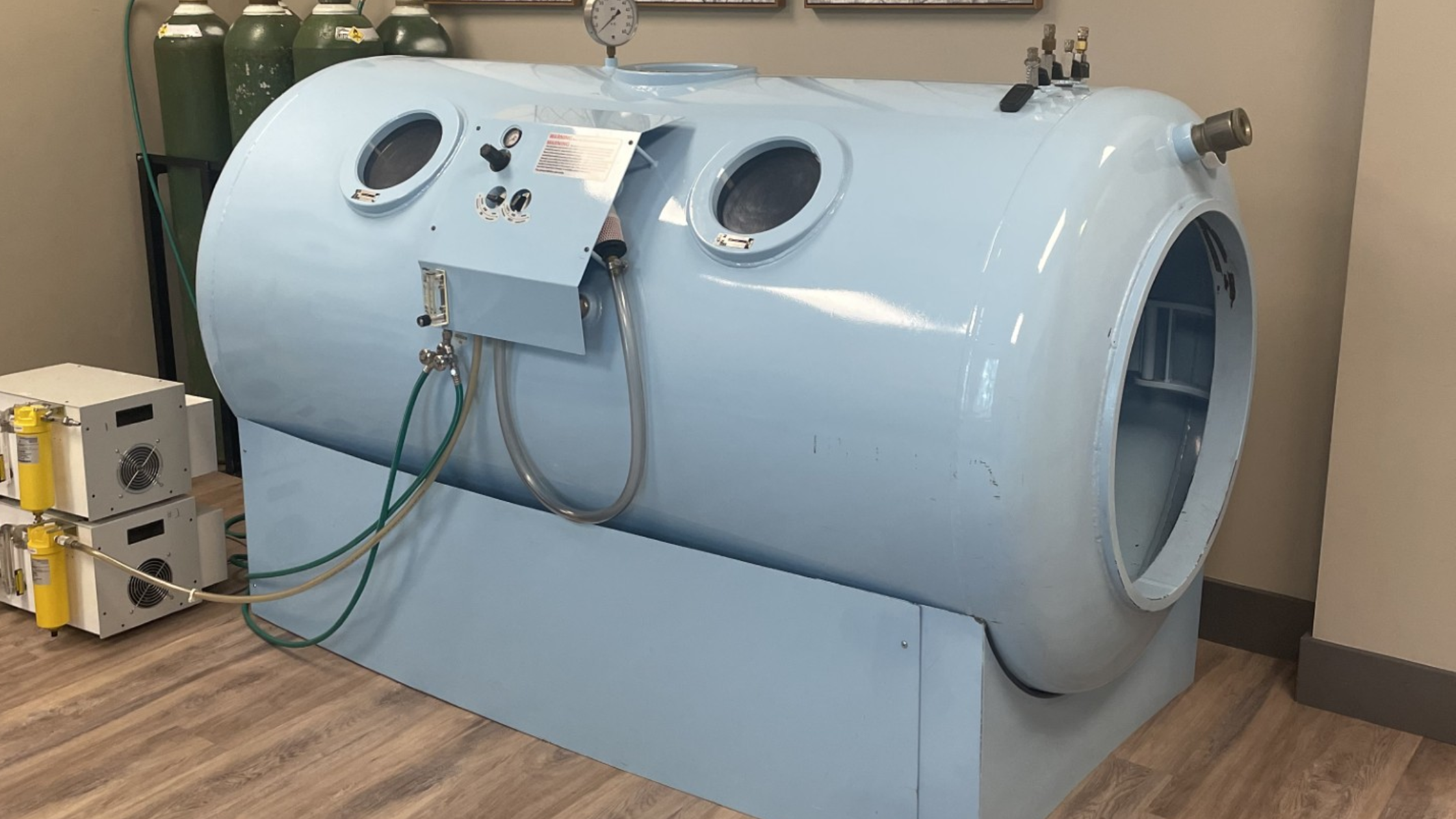
The next step was hyperbaric oxygen therapy — HBOT. Breathing pure oxygen inside a pressurized chamber forces oxygen into the blood plasma and tissues at much higher concentrations than normal breathing allows. It reaches areas that poor circulation has been leaving under-supplied.
For our chronic patients, this mattered a great deal. Many of them had tissues — including brain tissue — that were chronically low on oxygen. Not because they had lung problems, but because their circulation and cellular function had been compromised by ongoing inflammation and metabolic stress. HBOT helped push oxygen into those areas by force of concentration.
We started seeing patients who had plateaued with neurofeedback begin to move again once HBOT was added. The brain map improvements came faster. Cognitive symptoms lifted more consistently. Recovery between sessions improved.
This was an early confirmation of something we would see again and again: combining therapies produces results that none of them achieves alone. The brain training worked better when the tissue it was training had more oxygen to work with. Inputs and environment together.
The Immune Shift: How Ozone Changed the Picture for Chronic Illness
Oxygen therapy helped significantly. But a subset of patients — particularly those with long-standing viral illness, immune dysfunction, or what we now recognize as post-viral syndrome — had something else going on. Their immune systems were dysregulated in ways that hyperbaric oxygen alone wasn't resolving. The inflammation kept coming back. The fatigue had a different quality to it. The progress was slower than it should have been.
Adding medical ozone therapy changed that.
Ozone is a form of oxygen with three molecules instead of two. When it's introduced into the blood through a process called major autohemotherapy — combined with UVB light exposure — it creates a brief, controlled oxidative signal that does something remarkable: it resets how the immune system is behaving. It activates the body's own antioxidant defenses. It modulates the chronic inflammatory state that keeps so many of these patients stuck. And it improves how red blood cells carry and release oxygen to tissues.
For patients with chronic immune activation — the kind that shows up in viral reactivation, autoimmune patterns, and long-term post-infectious illness — ozone addressed something HBOT hadn't fully reached. The immune story shifted. Patients who had been managing their condition started recovering from it.
HBOT got more oxygen into the body. Ozone changed how the immune system was responding to that oxygen — and to everything else.
This combination — brain mapping, neurofeedback, HBOT, and ozone — became the foundation. It was producing meaningful results. But we still had patients, especially those with significant autonomic dysfunction, who needed more.
The Autonomic Piece: Why We Moved to ISF Neurofeedback
Standard neurofeedback trains the brain's faster frequencies — the ones involved in focus, alertness, and cognitive processing. It works. For many patients it works well. But for patients whose nervous system was deeply dysregulated — stuck in a chronic fight-or-flight state, unable to shift into recovery mode — training those frequencies didn't touch the root of the problem.
The autonomic nervous system has two modes. One is for action and stress. The other is for rest, repair, and recovery. In healthy people, the system moves fluidly between the two. In our most complex chronic patients, it was locked in the stress side. Their heart rate variability was low — a direct measure of how well the nervous system can shift between those two states. Their sleep wasn't restorative. Their bodies couldn't complete the recovery cycle that happens overnight.
Infra-slow fluctuation neurofeedback — ISF — operates at a much slower frequency range than standard neurofeedback. These slow rhythms are what coordinate the communication between the brain's networks and the part of the nervous system that controls heart rate, blood pressure, digestion, and recovery. In other words, ISF trains the part of the brain that runs the autonomic nervous system.
When we added ISF, the results in our most complex patients were different from anything we had seen before. Not just cognitive improvement — full system shifts. Sleep quality changed. Heart rate variability improved. The nervous system started finding its way back to a state where genuine recovery was possible. And with that autonomic shift, everything else we were doing worked better. The brain training held. The oxygen therapies produced more durable results.
ISF wasn't just an upgrade from standard neurofeedback. It was the piece that addressed why those patients couldn't fully heal with everything else in place.
The Most Recent Addition: Laser Therapy and the Energy Enzyme
The newest tool in our clinical stack is laser therapy — specifically near-infrared photobiomodulation. It sounds complex but the concept is straightforward.
Inside every cell, there's a process that converts oxygen into usable energy — ATP. Think of ATP as the fuel that powers everything the cell does. The final step in that process is performed by a single enzyme called cytochrome c oxidase. It's the last link in the chain. And it's sensitive to light.
Near-infrared laser light, applied at the right wavelength and power, directly activates that enzyme. It stimulates it to work faster and more efficiently. More oxygen gets converted to ATP. The cell produces more energy.
For patients whose mitochondria are underperforming — which we can now confirm directly through PNOĒ metabolic breath testing — laser therapy offers something no other tool in our protocol does. It's not improving the conditions around the enzyme. It's activating the enzyme itself.
Applied to the brain through the skull, near-infrared laser reaches the frontal and temporal regions most commonly affected in our chronic fatigue and post-viral patients. When combined with ISF neurofeedback — which is restoring how the brain manages blood flow and oxygen distribution — the laser is working on the cellular energy production side of the same problem. Two approaches, same root cause, both necessary.
It is the most recent addition to what we do. It is also one of the most impactful we have seen in patients who had already gone through the rest of the protocol and still had a ceiling they couldn't break through.
A Note on Vitamin C: Why the Form Matters
We have used high-dose intravenous vitamin C for years. At therapeutic levels, vitamin C does more than act as an antioxidant — it plays a direct role in the cellular energy production process we have been describing. It supports the mitochondria. It reduces oxidative stress in the tissues that need it most.
For most of that time, we used ascorbic acid — the standard form. It worked. Patients responded well.
More recently, we made the switch to sodium ascorbate — a buffered form of vitamin C that is less acidic and appears to be utilized more effectively at the cellular level. The shift has been noticeable clinically. The same therapy, meaningfully better outcomes. We also pair it with liposomal vitamin C for daily maintenance between IV sessions — a form that absorbs far better than standard oral vitamin C and keeps the tissue levels more consistent.
It's a small change that made a real difference. That's often how it goes.
What All of This Adds Up To
None of these tools arrived at once. Each one came because the patients in front of us needed something we didn't have yet. Brain mapping showed us what the brain was doing. Standard neurofeedback began to address it. HBOT brought oxygen to tissue that needed it. Ozone reset the immune patterns that kept chronic patients stuck. ISF reached the autonomic nervous system that standard neurofeedback couldn't fully access. Laser therapy activated the enzyme that finishes the ATP production process. And vitamin C, in the right form, supports the whole chain.
What they share is a single target: how well your body produces and uses cellular energy, and what is getting in the way.
That is the question we start with at The Dearing Clinic. Not what are your symptoms. Not what does your bloodwork show. What is actually happening in the systems responsible for keeping you functional — your mitochondria, your autonomic nervous system, your brain's electrical activity, your immune environment — and in what order does it need to be addressed.
If you have been through the standard workup and are still looking for answers, that question is where we start. A New Patient Consultation gives us the measurements to answer it and the framework to act on what we find.
We built this approach because the patients who came here needed it. That's still the reason we keep building it.
Frequently Asked Questions
1. What causes chronic fatigue and brain fog when tests are normal?
Chronic fatigue and brain fog are often linked to mitochondrial dysfunction, poor cellular energy production, and nervous system dysregulation, which are not detected in standard lab tests.
2. What is qEEG brain mapping and how does it help?
qEEG brain mapping measures brainwave activity to identify patterns associated with chronic fatigue, brain fog, and neurological dysfunction, helping guide targeted treatment.
3. How does hyperbaric oxygen therapy (HBOT) help chronic fatigue?
Hyperbaric oxygen therapy (HBOT) increases oxygen delivery to tissues, improving cellular metabolism, brain function, and recovery in chronic illness and post-viral syndromes.
4. What is ozone therapy used for in chronic illness?
Ozone therapy helps regulate the immune system, reduce chronic inflammation, and improve oxygen utilization, especially in patients with long COVID and autoimmune conditions.
5. What is autonomic nervous system dysfunction?
It is an imbalance in the nervous system that keeps the body in a chronic stress (fight-or-flight) state, leading to poor sleep, fatigue, and reduced recovery.
6. How does ISF neurofeedback improve recovery?
ISF neurofeedback retrains the brain to regulate the autonomic nervous system, improving sleep quality, heart rate variability, and the body’s ability to heal.
7. What is photobiomodulation or laser therapy?
Near-infrared laser therapy stimulates mitochondrial function to increase ATP production, energy levels, and brain performance in chronic fatigue patients.
8. Why is mitochondrial function important for healing?
Mitochondria produce the energy (ATP) needed for all body processes, so dysfunction can lead to fatigue, brain fog, and slow recovery.
9. What role does vitamin C play in chronic fatigue treatment?
High-dose vitamin C (especially sodium ascorbate) supports mitochondrial energy production, reduces oxidative stress, and enhances immune function.
10. What is the best treatment approach for chronic fatigue and long COVID?
The most effective approach is a personalized, multi-system treatment plan that targets brain health, mitochondrial function, oxygen delivery, immune balance, and nervous system regulation.
Dr. Justin Dearing
Ready to feel like you again?
* Your next step toward feeling better starts today. At The Dearing Clinic we make it simple to get started with care that truly fits your life. Book your visit now and let’s design a plan that restores your energy, relieves your pain, and helps you enjoy more of what matters most.