
Five Years After COVID Changed Everything: What We Now Understand About the Brain, the Immune System, and Why So Many People Never Fully Recovered
Five years after the COVID-19 pandemic reshaped global health, the medical community is still uncovering how the virus altered the relationship between the brain and immune system. While many recovered quickly, a significant number of people developed lingering symptoms such as brain fog, fatigue, autonomic dysfunction, and chronic inflammation. Emerging research suggests that COVID was not simply a respiratory infection—it disrupted immune signaling, brain inflammation pathways, and the protective barriers that regulate communication between the body and the nervous system. These disruptions help explain why some individuals never fully returned to baseline health and why symptoms can persist for months or even years. This article explores what clinicians and researchers now understand about post-COVID immune dysfunction, neurological symptoms, and why a growing number of patients require a more integrated brain-immune recovery approach.


Key Points
- COVID-19 affected far more than the lungs—it disrupted the brain-immune communication network that regulates inflammation, metabolism, and nervous system signaling.
- Millions of people developed long COVID, a condition where symptoms persist for months or years after the initial infection.
- Research suggests lingering symptoms may involve persistent immune activation, inflammation, and immune system dysregulation even after the virus is no longer detectable.
- Neurological symptoms such as brain fog, fatigue, memory problems, and mood changes are common in post-COVID patients.
- Studies have identified brain inflammation and small blood vessel injury following COVID infection, helping explain cognitive and neurological symptoms.
- Damage or dysfunction of the blood-brain barrier may allow inflammatory signals to reach the brain, contributing to cognitive symptoms like brain fog.
- Many post-COVID cases involve dysautonomia and metabolic dysfunction, affecting energy production, heart rate regulation, and stress responses.
- Recovery often requires addressing immune balance, metabolic health, and neurological regulation together, rather than focusing on symptoms in isolation.
Five Years After COVID Changed Everything: What We Now Understand About the Brain, the Immune System, and Why So Many People Never Fully Recovered
The conditions we now call ‘long COVID’ have existed for decades under different names. What’s new isn’t the biology — it’s the scale.
Before COVID became a household word, I was already seeing these patients.
High-achieving adults in their 40s and 50s who couldn't bounce back from a viral illness everyone else shrugged off in two weeks. Patients who'd been dismissed by three specialists, told their labs were normal, handed an antidepressant, and sent home. Patients who knew something was genuinely wrong — with their energy, their thinking, their ability to function — and couldn't find a single doctor willing to look closely enough to find it.
I've been treating post-viral neuro-metabolic dysfunction for seventeen years. The clinical picture I was seeing in 2020, 2021, and 2022 — the flood of long COVID patients coming into functional and integrative medicine practices — wasn't new to me. The biology was familiar. The patterns on brain maps, the nervous system findings, the metabolic markers, the immune profiles — I had seen all of it before.
What was new was the sheer number of people experiencing it. And what that volume finally forced medicine to acknowledge.
COVID didn't invent post-viral illness. It ran the largest uncontrolled clinical trial in human history — and made the results impossible to ignore.
This piece is about what those results actually tell us. About the brain, the immune system, and the specific biological patterns that explain why so many people never fully came back.
Post-Viral Syndrome Is Not a New Diagnosis
Before COVID, clinicians like me were treating what mainstream medicine called chronic fatigue syndrome, post-viral fatigue, fibromyalgia, and a cluster of other diagnoses that shared one uncomfortable thing in common: no standard test could find the problem, so many doctors concluded the problem wasn't real.
The patients knew otherwise. And so did we.
The neuro-metabolic picture in these patients was consistent and measurable — if you used the right tools. Brain network dysregulation on brain mapping. Nervous system dysfunction on heart rate variability testing. Mitochondrial stress on organic acids testing. Gut and immune disruption on microbiome panels. Elevated neural antibodies on immune profiling.
None of these are standard tests. None of them show up in a routine blood panel. Which is exactly why these patients were told they were fine when they clearly weren't.
COVID created 400 million new data points. And suddenly the research world had enough statistical power to confirm what integrative and functional neurologists had been observing clinically for decades: that a viral illness, in the right person, can trigger a cascade of neuro-metabolic disruption that outlasts the infection by months or even years.
Your Immune System Can Only Do So Much at Once
To understand why this happens, you need a different way of thinking about how your immune system manages its workload.
Most people think of immunity as reactive — a system that switches on when a threat shows up and goes quiet when it's gone. That's true for acute infection. But it misses a critical ongoing job: containment.
Your body carries a significant load of dormant viruses. Viruses you've encountered throughout your life — Epstein-Barr virus, cytomegalovirus, HHV-6, and others — don't disappear after your initial infection. They live in your tissues in a dormant state, kept quiet by a dedicated portion of your immune system working around the clock to hold them there.
That ongoing work requires real resources. It isn't passive. And it competes directly with every other demand placed on your immune system.
When a major immune event hits — a significant viral infection, years of chronic stress, active autoimmunity, or heavy allergic burden — your immune system doesn't conjure up new capacity. It reassigns what it already has. The resources that were keeping dormant viruses contained get pulled toward the active emergency.
And what was being quietly held in check starts to move.
This isn't immune failure. It's a capacity problem. And COVID overwhelmed that capacity faster and more completely than anything most immune systems had encountered in a generation.
What COVID specifically did was trigger a massive, simultaneous immune mobilization in a population carrying decades of accumulated dormant viral burden — most of which had been perfectly managed until that containment work got deprioritized. The result was a predictable surge in reactivated infections, immune system misfiring, and neuro-metabolic disruption that continues to show up in clinical practice today.
The Four Viruses That Move When Immune Surveillance Gets Pulled Away
These aren't rare or exotic viruses. They're carried silently by the majority of adults worldwide, held in check by normal immune surveillance. When that surveillance is weakened — by COVID or by any of the other capacity-depleting mechanisms described below — these viruses reactivate and start causing damage in ways that standard infectious testing isn't designed to catch.
Epstein-Barr Virus: The Most Well-Documented Post-COVID Reactivation
EBV infects more than 90% of adults worldwide and stays dormant in immune cells for life. Under normal immune surveillance, it causes no symptoms and no problems.
The post-COVID EBV data is among the strongest in the long COVID literature. Multiple independent research groups have found EBV reactivation in 42–67% of long COVID patients. A longitudinal study identified active EBV as one of only four factors that predicted who would develop long COVID. The symptom overlap is specific: reactivated EBV is strongly linked to fatigue and cognitive symptoms — brain fog, slowed thinking, poor memory and concentration — while showing little connection to heart or gut-based long COVID.
The mechanism matters clinically, because it explains why standard panels miss it. The issue in long COVID patients isn't active EBV infection with high viral loads. It's the immune response to reactivation — ongoing inflammation, autoantibody formation, and neural immune reactions triggered by the body's attempt to re-contain the virus. EBV proteins directly drive inflammatory signals. EBV-specific immune cells cross-react with brain tissue. The result is chronic neuroinflammation that can persist long after the reactivation itself.
This is why we include EBV antibody profiling in our post-viral workup, and why neural immune findings in this population frequently reflect the downstream consequences of EBV reactivation rather than an active, ongoing infection.
HHV-6: The Brain-Specific Herpesvirus
Human herpesvirus 6 is the second most commonly identified herpesvirus reactivation in post-COVID patients, appearing in roughly 25% — and in combination with EBV in a significant number of cases. Its most clinically relevant feature is neurological specificity: HHV-6 has a documented affinity for brain tissue and has been linked to disruption of the protective coatings around nerves, nerve communication, and the tight junction proteins that regulate both gut permeability and the integrity of the blood-brain barrier.
HHV-6 reactivation has been connected to autoimmune reactions against neuronal proteins including myelin and synaptic components. For patients presenting with persistent cognitive symptoms, nervous system dysregulation, and gut dysfunction simultaneously, HHV-6 as a shared driver across all three systems is a clinically meaningful possibility worth investigating.
Cytomegalovirus: The Vascular Mechanism
CMV reactivation is less frequently discussed in long COVID contexts but carries specific relevance for patients whose primary complaints involve vascular and cognitive symptoms. CMV preferentially reactivates in the cells that line blood vessels. In the brain, CMV reactivation in those cells can compromise the blood-brain barrier, allowing peripheral inflammatory signals and immune cells to enter the central nervous system. This mechanism has been proposed as a contributor to the microvascular dysfunction that's increasingly recognized as a feature of long COVID.
CMV also drives a state of chronic immune overactivation and reduced functional capacity that directly impairs the surveillance responsible for containing other dormant pathogens. In patients with complex post-viral presentations, CMV's contribution to broader immune dysfunction may be as significant as its direct neurological effects.
Coxsackievirus B: The Autoimmune Metabolic Trigger
Coxsackievirus B is not a herpesvirus and doesn't follow the same dormancy-reactivation model, but it belongs in this conversation for a specific clinical reason: it is documented as a co-infection that gets activated in the presence of COVID, and its consequences extend into metabolic and cardiac territory that the other viruses on this list don't occupy.
CVB is known to trigger autoimmune responses through a process called molecular mimicry, with particular relevance to specific antibodies that bridge neurological autoimmunity and metabolic dysfunction. CVB has been associated with heart inflammation, the lining around the heart, and blood sugar dysregulation beyond what standard COVID sequelae would predict. We test for it via specific antibody markers precisely because standard infectious workups will miss it.
COVID Is the Most Dramatic Example. It's Not the Only One.
This is the part of the conversation that extends well beyond the long COVID patient specifically — and speaks directly to the broader group of patients who arrive at a practice like ours having never had COVID but sharing an identical neuro-metabolic picture.
Immune surveillance capacity gets worn down through multiple mechanisms, some acute and some slow-building:
Chronic allergic burden
This runs a slow, steady drain on immune resources. The immune activation underlying environmental allergies, food sensitivities, and atopic conditions isn't passive. It consumes regulatory capacity that would otherwise be available for keeping dormant pathogens contained. Patients with decades of unmanaged allergic load arrive at middle age with their immune surveillance already significantly weakened before any acute immune event occurs.
Autoimmune activity
This creates a similar problem through a different mechanism. When the immune system is chronically misdirected against its own tissues, the immune populations responsible for viral dormancy surveillance compete for the same functional pool. The result is a state of chronic immune preoccupation that leaves containment of dormant pathogens perpetually understaffed.
Chronic stress physiology
This is perhaps the most underappreciated way immune surveillance gets depleted in the patients we treat. Sustained cortisol elevation and a nervous system stuck in fight-or-flight mode directly suppress the specific immune cells responsible for keeping dormant viruses contained. This is the biological reason herpes simplex reactivates during periods of intense stress — something most people have experienced firsthand. The same biology operates at a larger scale in patients with years of unresolved autonomic dysfunction.
COVID made this loss of immune surveillance capacity impossible to ignore. But for many patients, that capacity was already wearing thin long before COVID arrived.
Why This Doesn't Show Up on Standard Testing
The most consistent frustration expressed by patients with these presentations — and the most consistent failure of conventional medicine in addressing them — is the gap between how bad patients feel and how unremarkable their standard labs appear.
The explanation is straightforward once you understand the mechanism. Standard infectious panels are designed to detect active infection: high viral loads, acute-phase antibody responses, inflammatory markers at crisis levels. They are not designed to detect what happens when immune surveillance gets depleted — which shows up not as active infection, but as the removal of suppression, the buildup of neuro-immune disruption, and the downstream metabolic effects of chronic neuroinflammation.
Detecting this picture requires a different diagnostic lens. The tools we use at The Dearing Clinic — qEEG brain network mapping, HRV-based autonomic profiling, PNOE metabolic breath analysis, organic acids testing for mitochondrial and neurochemical markers, neural antibody panels, and targeted viral serology — are specifically designed to capture the functional consequences of this biology rather than looking for the acute infectious signal that is no longer there.
The question we're answering is not 'is this patient currently infected?' but rather 'what has this patient's immune history done to their brain function, their mitochondrial output, their nervous system regulation, and their gut-immune integrity?' — and how do we restore what's been disrupted?
What Restoration Actually Requires
Understanding how immune surveillance actually works changes the treatment logic entirely. The goal isn't to eradicate dormant pathogens — that isn't possible in most cases, and it isn't necessary. The goal is to restore the immune surveillance capacity that keeps them contained, and to repair the neuro-metabolic damage that built up while that capacity was compromised.
This is exactly the framework underlying the Rhythm Reset System. Nervous system stabilization through HRV-guided intervention restores the parasympathetic tone that supports immune regulation. Mitochondrial rehabilitation through metabolic conditioning restores the cellular energy that immune surveillance requires. Gut-immune restoration through targeted microbiome intervention addresses one of the primary drivers of ongoing inflammatory burden. Brain-map-guided neurofeedback directly addresses the brain network dysregulation that both causes and is caused by the neuro-immune disruption described throughout this piece.
These are not parallel interventions. They are sequential, interdependent components of a single restoration process — one that addresses the underlying system dysfunction rather than managing the symptom outputs.
If you've been told you're fine while knowing something isn't right — this is the biology behind why. And this is the framework for what comes next.
Frequently Asked Questions
Why do some people still have symptoms years after COVID?
Some people experience long-term symptoms because COVID can disrupt immune signaling, brain inflammation pathways, and autonomic nervous system regulation. Even after the virus clears, the immune system may remain activated, which can contribute to ongoing fatigue, brain fog, and inflammation.
What are the most common long COVID symptoms?
The most frequently reported long COVID symptoms include brain fog, chronic fatigue, shortness of breath, sleep disturbances, heart rate irregularities, digestive issues, and persistent inflammation. Many patients also report neurological symptoms such as difficulty concentrating and memory problems.
Can COVID cause brain fog and cognitive problems?
Yes. Many people experience brain fog after COVID due to inflammation in the brain, immune system activation, and disruption of the blood-brain barrier. These changes can affect memory, concentration, and mental clarity.
How does COVID affect the immune system long term?
COVID can alter immune signaling and inflammatory pathways. In some people, the immune system stays in a prolonged activated state, which can lead to persistent symptoms such as fatigue, joint pain, neurological symptoms, and increased sensitivity to stress or infections.
Why do some people develop long COVID while others recover quickly?
Researchers believe long COVID risk may be influenced by immune system health, metabolic function, gut microbiome balance, and how the nervous system responds to inflammation. Pre-existing immune or metabolic dysfunction may make recovery more difficult for some individuals.
Can COVID damage the nervous system?
COVID can affect the nervous system by triggering inflammation in the brain and disrupting autonomic regulation. This may lead to symptoms such as dizziness, fatigue, heart rate variability, sleep disturbances, and cognitive changes.
How long can long COVID symptoms last?
For some individuals, symptoms resolve within a few months. For others, symptoms can persist for a year or longer if immune dysregulation, metabolic dysfunction, or neurological inflammation remain unresolved.
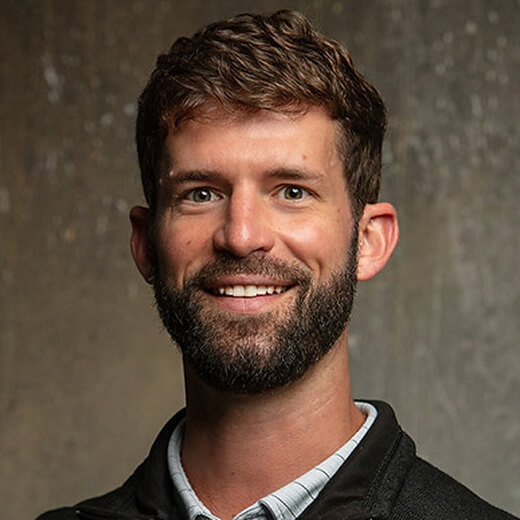
Dr. Justin Dearing
Ready to feel like you again?
* Your next step toward feeling better starts today. At The Dearing Clinic we make it simple to get started with care that truly fits your life. Book your visit now and let’s design a plan that restores your energy, relieves your pain, and helps you enjoy more of what matters most.