
When Pain Medication Only Takes the Edge Off
Chronic pain that keeps coming back after medication wears off is often a movement problem, not just a pain problem. This article explains The Dearing Clinic's movement-first approach — combining myosynaptic manual therapy, spinal decompression, targeted exercise rehab, and regenerative injections — to treat the root cause of headaches, migraines, and chronic back, shoulder, and knee pain, not just mask the symptoms.
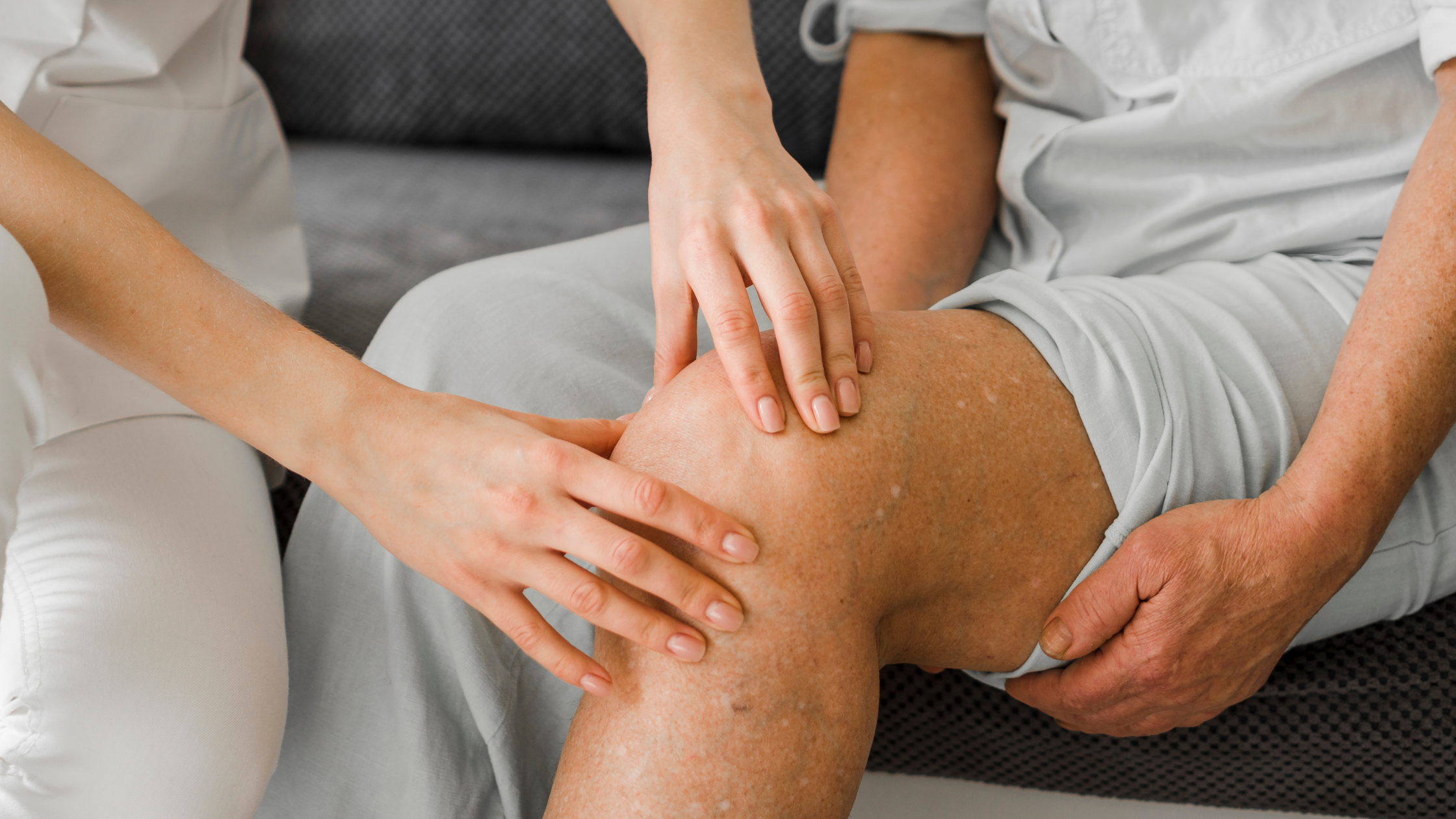

When Pain Medication Only Takes the Edge Off
A movement-first approach to headaches, migraines, and chronic back, shoulder, and knee pain.
Key Points
- Pain medication turns down the pain signal. It does not fix what is causing the pain.
- Your body is built to move. Joints, nerves, fascia, fluid, and even your brain's picture of your body all depend on healthy movement.
- Headaches and migraines are often connected to stiffness and irritation in the upper neck, not just the head.
- We combine cranial and myofascial work into one treatment, called myosynaptic technique, because the two areas are connected.
- Spinal decompression and manual traction have research support for disc pain, sciatica, and spinal stenosis.
- Exercise rehab is what makes the results last. Manual therapy opens a window of improvement, and exercise keeps it open.
- Regenerative injections, like prolozone and PRP, can help when the tissue itself needs support, and they work best combined with manual therapy and exercise.
- The goal is not just less pain. It is moving well enough that the pain stays away.
The problem with “take this and see how you feel”
Most people who come to our office have already tried medication. Ibuprofen. A muscle relaxer. A migraine drug called a triptan. Maybe a steroid pack, or a cortisone shot in the shoulder or knee.
The story is usually the same. It helped for a while, but the pain came back.
That does not mean the medication failed. It means the medication and the problem did not match. Most pain relievers just turn down the pain signal. They do not fix what is causing it. The real cause might be a joint that cannot move through its full range. Or a nerve that cannot slide freely inside its casing. Or a layer of tissue that has stopped gliding over the layer below it. Or a spine that has quietly shifted around an old injury you barely remember.
If you only turn down the signal, the real problem does not go away. It often gets worse and spreads.
Everything in your body is built to move
This idea guides how we treat pain at The Dearing Clinic.
Your body is not a pile of separate parts. It is one connected, flexible system. Almost every part of it is built to move.
- Joints move through arcs. That motion feeds the cartilage inside them. Cartilage has no blood supply of its own, so it depends on movement to get nutrients.
- Nerves are not fixed wires. Every time you bend, reach, or take a step, your nerves slide a few millimeters inside their protective tunnels.
- Fascia is the connective tissue that wraps around every muscle, organ, and blood vessel. It is made of layers that are meant to glide against each other. When those layers stick together, force cannot move through them the way it should. It gets dumped somewhere it was never meant to go.
- Fluid moves too. Blood, lymph, and the fluid around your brain and spine all flow along with your breathing, your heartbeat, and your posture.
- Your brain moves in an important way as well. It constantly updates its picture of your body based on the movement it senses. If you feed it stiff, guarded, low-quality movement for long enough, it builds a stiff, guarded picture of your body. That picture itself can start to cause pain.
Pain that lasts longer than the injury itself is very often a movement problem that turned into a nervous system problem.
Why your headache may not be a head problem
Chronic headaches and migraines show this brain-body connection clearly.
The top of your neck, meaning the first three bones, shares nerve wiring in the brainstem with the trigeminal nerve. That is the nerve that carries feeling from your face and head. This shared wiring is called trigeminocervical convergence. Signals from your neck and signals from your head arrive at the same relay point in your brain. So when the joints at the top of your neck, the muscles at the base of your skull, and the connective tissue around them are stiff and irritated, that irritation does not stay in your neck. Your brain reads it as head pain.
This is why so many migraine patients also have jaw tightness, a neck that turns further one way than the other, a head that juts forward, and shoulders that sit up near their ears. It is also why treating only the head so often does not fully work.
What we actually do: myosynaptic technique
We use the term myosynaptic technique for the combination of care we have found works best. It blends cranial work and myofascial work into one treatment instead of two separate ones.
Cranial and upper neck work targets the base of the skull, the jaw and neck muscles, and the dense connective tissue in that area. The goal is simple and mechanical: restore normal motion and calm down irritation in a region that has a big effect on head, face, and neck pain.
Myofascial work targets the gliding surfaces of your tissue. We release the spots where layers have stuck together, restore length and slide, and free up nerves so they can move normally through their tunnels again.
Why do both together? Because your fascia does not stop at your neckline. The tissue connecting your skull base, your neck, your shoulders, and your mid and lower back is all one continuous web. If you treat one end and ignore the other, the same problem tends to come back four to six weeks after every visit.
Spinal decompression and traction: what it does and does not do
For a herniated disc in the lower back, pain that radiates down the leg, sciatica, or leg pain from spinal stenosis, we use non-surgical spinal decompression and manual traction.
Here is what the research shows. Manual traction eases pain and improves the signs doctors check to see if a nerve root is being pinched, such as the straight-leg raise test. In controlled studies, non-surgical decompression has reduced leg pain and disability in people with a recent lumbar disc herniation. One study even found it shrank the size of the herniated disc on MRI scans. It has also improved pain, motion, and function in people with nerve pain from a herniated disc. For spinal stenosis, manual therapy has worked better than medication, injections, or stretching exercises at improving daily function in randomized studies.
We will also tell you what this treatment does not do, because we would rather you hear it from us than from someone trying to sell you something.
You may see claims online that spinal or cranial manual therapy restores the flow of cerebrospinal fluid, the fluid that surrounds your brain and spinal cord. The science behind that fluid is real and genuinely interesting. Special MRI scans do show abnormal fluid flow at the base of the spine in people with spinal stenosis, and that abnormal flow lines up with how severe their symptoms are. New computer models also show that stenosis and body position change fluid pressure and flow. But the only treatment shown to actually restore that flow is surgery. The idea that manual therapy can do it is a hypothesis from a 2009 paper that has never actually been tested with before-and-after fluid measurements.
So we treat your mechanics, your nerve movement, and your pain. We are upfront that cerebrospinal fluid flow is an interesting area of research, not something we are claiming to fix. On the safety side, a 2026 study that tracked about 89,000 matched patients in each group found no extra risk of a spinal fluid leak after spinal manipulation, compared to supervised exercise.
Global exercise rehab: the part that makes it last
Manual therapy opens a window of improvement. Exercise is what keeps that window open.
This is the step many clinics skip or shortchange, and it is why care that only involves adjustments or massage tends to stall out. We call our approach “global” because it is not just three exercises handed to you for the sore spot.
- Restore the range of motion you just gained, actively, so your nervous system learns that it is available to use.
- Load the tissue gradually, because tendons and cartilage get stronger from gradual load, not from rest.
- Retrain the movement pattern. A knee that hurts is often paired with a hip and ankle that stopped doing their share of the work. A shoulder that hurts is often paired with a mid-back that stopped rotating.
- Rebuild your brain's map of your body. New, varied, confident movement is how you convince a guarded nervous system to stop guarding.
Regenerative injections: when the tissue itself needs help
Sometimes movement work alone is not enough, because the tissue itself is worn down, chronically inflamed, or not getting enough blood flow. Think of a partly torn rotator cuff, a stubborn case of tendinitis, or an arthritic knee.
Prolozone combines a proliferant solution with medical ozone, injected directly into the joint, ligament, or tendon. The goal is to raise local oxygen levels and trigger a controlled healing response in tissue that has gone metabolically quiet. Prolotherapy in general has support from randomized trials for conditions like knee osteoarthritis and tennis elbow. The evidence specifically for ozone is thinner and mostly comes from observational studies, and we will say that plainly.
PRP injections concentrate the platelets and growth factors from your own blood and place them where the tissue is struggling. The evidence is strongest for knee osteoarthritis and certain tendon injuries, and it is genuinely mixed. Some high-quality studies show good results, others do not. It is not a miracle cure, and anyone who tells you it is should raise a red flag.
These injections work best in combination with other care. An injection opens a biological window for healing in the tissue. Manual therapy restores the mechanics around it. Exercise rehab loads the tissue correctly while it heals. Any one of these three alone works less well than all three together.
Who this is for
Consider a full movement-first evaluation if you are dealing with:
- Chronic or repeat headaches, or migraines that medication only partly controls
- Neck pain, jaw tightness, or headaches that start at the base of your skull
- Chronic low back pain, sciatica, or leg pain and numbness when you walk
- Shoulder pain, impingement, or a rotator cuff problem that rest has not fixed
- Knee pain or early arthritis you have been told to just live with until you need a replacement
- Pain that has outlasted the injury that started it
- Pain that keeps coming back to the same spot no matter what you try
What a first visit looks like
We start with a full movement and nerve assessment, not just of the area that hurts. We look at how your whole body loads, moves force through itself, and compensates: joint motion, nerve movement, tissue restriction, breathing, and how your nervous system is currently guarding you. We order imaging and lab tests only when they will actually change your treatment plan, not just as a routine step.
Then we build a plan. It usually combines myosynaptic manual therapy, decompression or traction if needed, global exercise rehab, and regenerative injections if the tissue calls for it.
The goal is not just to get you out of pain. It is to help you move well enough to stay out of pain.
Frequently asked questions
1. How is this different from what I have already tried?
Most treatments you have tried, like medication, injections, or a single round of physical therapy, target one piece of the problem. We look at your whole system: joints, nerves, fascia, and how your nervous system is guarding you. Then we treat the pattern, not just the sore spot.
2. Will this hurt?
Some techniques, like myofascial release or spinal decompression, can feel like pressure or a stretch. Most patients describe it as intense but tolerable, not sharp or painful. We adjust pressure and technique based on your feedback during the visit.
3. How many visits will I need?
It depends on how long you have had the problem, how your body responds, and what is driving your pain. Some people notice a difference after the first visit. Others need a series of visits combined with home exercise before the improvement holds. We will give you a realistic plan and timeline after your first evaluation.
4. Do you treat migraines even if I do not have neck pain?
Yes. Many migraine patients do not realize their neck is involved, because the pain shows up in their head, not their neck. We check for trigeminocervical convergence, the shared nerve wiring between your upper neck and your head, during your evaluation.
5. Is spinal decompression safe?
For most people with disc-related pain or spinal stenosis, yes. We screen for conditions where traction is not appropriate before we begin. Large studies have not found an increased risk of serious complications from manual spinal therapy compared to supervised exercise.
6. Do I need a referral or imaging before my first visit?
Not usually. We start with a full movement and nerve assessment. We only order imaging or labs when the results would actually change your treatment plan.
7. What if I have already had surgery or injections and still have pain?
That is common, and it is one of the main reasons people come to us. Surgery and injections can fix a specific structural problem, but they do not always restore normal movement patterns afterward. We evaluate what is still restricted or guarded and build a plan around that.
8. Will insurance cover treatment?
The Dearing Clinic is not in network with insurance but can provide a superbill for you to submit to insurance.
Ready to feel like you again?
* Your next step toward feeling better starts today. At The Dearing Clinic we make it simple to get started with care that truly fits your life. Book your visit now and let’s design a plan that restores your energy, relieves your pain, and helps you enjoy more of what matters most.