
Should You Be Afraid of Tick Bites? The Truth About Lyme Disease, Alpha-Gal, and Immune Health
Ticks are out this summer — but fear shouldn't keep you from nature. This article breaks down the real science behind Lyme disease and alpha-gal syndrome, explains why your immune terrain matters more than the tick itself, and gives you practical, evidence-based steps to build a resilient body. We also clear up the bioweapon conspiracy theories making the rounds online.
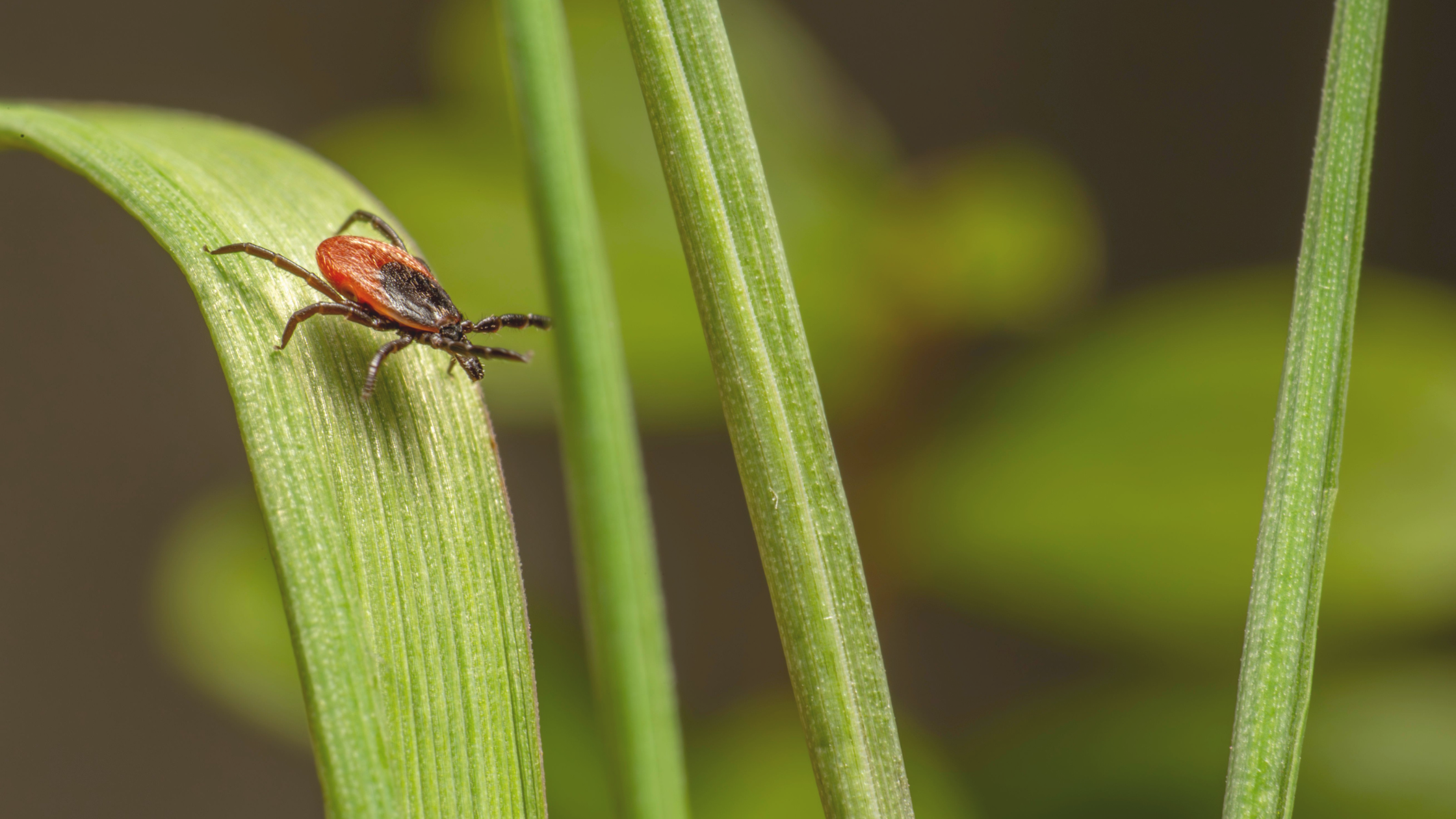

It's Summer, Ticks Are Everywhere, and You Shouldn't Be Afraid to Enjoy Nature
Why a balanced body handles most tick bites just fine, the real science on Lyme and alpha-gal, and the conspiracy theories refuted
Key Points
- Time in nature is essential — tick fear shouldn't keep you indoors. Basic prevention (check, remove promptly, monitor) is enough for most people. tick prevention tips summer
- Whether a bite becomes serious depends far more on the body it meets than the bite itself — your immune terrain is the deciding factor. immune system tick bite risk factors
- Lyme disease and alpha-gal syndrome are different conditions — bacterial vs. allergy — but both trace back to the same root: a dysregulated immune system. Lyme disease vs alpha-gal syndrome
- Most chronic Lyme symptoms are driven by an immune response that won't switch off, not active bacteria — similar to long COVID's mechanism. chronic Lyme disease symptoms causes
- Inflammation hijacks the tryptophan pathway, depleting serotonin and melatonin while producing brain-irritating quinolinic acid — causing fog, low mood, and poor sleep. tryptophan inflammation brain fog Lyme
- The gut amplifies immune dysregulation — a leaky gut keeps inflammation locked on and suppresses the tolerance signals needed for recovery. gut health immune system Lyme recovery
- Bioweapon conspiracy theories about ticks lack evidence — Lyme bacteria predate modern labs by thousands of years, confirmed in ancient preserved specimens. Lyme disease bioweapon conspiracy debunked
- Resilient immune terrain is built through consistent sleep, daily movement, nervous system regulation, and gut support — ordinary habits with the biggest protective impact. how to strengthen immune system naturally
It is summer. Ticks are out, they are in the news, and the headlines would rather you stay inside. Do not let them. Go outside, hike, camp, garden, let your kids play in the grass. Time in nature is good for you, and the fear of a tick should not keep you from it.
Here is why that is reasonable. A tick bite is a trigger. Whether it turns into something serious depends far more on the body that meets it than on the bite itself. We have walked the same woods for decades and been bitten more times than we can count, with no Lyme and no alpha-gal. For most people whose terrain is in balance, a tick is a nuisance, not a life sentence.
Use basic sense. Check for ticks after you have been outside, remove them promptly, and watch a bite that looks angry or spreads. Then stop worrying and start building the one thing you actually control, which is a body resilient enough to handle what it meets. Here is the science, with the conspiracy theories cleared first.
A quick word on the conspiracy theories
Search alpha-gal or Lyme and you will hit it fast. These are bioweapons, made in a lab, released on purpose. Your skepticism is not foolish. The question of where COVID came from went from a dismissed conspiracy to a lab origin that serious people, including parts of the US government, now consider likely. Labs do real and sometimes risky work, and the public has earned the right to ask hard questions.
But each claim still has to stand on its own evidence, and the tick claims do not. A recent bioethics paper floated, as a pure philosophy exercise, whether spreading a meat allergy could ever be moral. It was a thought experiment, not a plan, and the technology to engineer a tick to do that does not exist. Stripped of context, it got passed around as proof of something it never said.
The older theory, that infected ticks were released from a government lab near Lyme, Connecticut, fails on the timeline. The bacteria behind Lyme and the ticks that carry it have been in North America for thousands of years, found in preserved specimens that predate the lab. You cannot release something that was already here. The simpler explanation fits the facts: warmer winters are letting ticks spread into new regions.
And here is the part that matters most. Where the tick came from does not change what you do next. You cannot control the exposure. You can build the body that meets it. That is the part in your hands, and it is what the rest of this is about.
Two different illnesses, one shared problem
Lyme and alpha-gal are not the same kind of illness.
Lyme is a bacterial infection. A tick passes the bacteria into you, and your body has to clear it and calm the inflammation that comes with it.
Alpha-gal is an allergy. Certain tick bites can sensitize your immune system to a sugar found in red meat, so that eating beef or pork later sets off a reaction. One is a clearance problem. The other is a tolerance problem.
Underneath, they share something. Both come down to immune regulation that is not doing its job. In one case the immune system cannot finish the fight. In the other it overreacts to something harmless. Different faces, same broken control system.
Here is the part most people get wrong
A lot of people picture Lyme as bacteria eating away at the brain. That is mostly not what is happening.
COVID taught this lesson on a huge scale. The virus does not have to be in your brain to cause brain fog, mood changes, and poor sleep. Most of that damage comes from an immune response that will not switch off. The fire does the harm, not just the spark.
Lyme works in a similar way for most people. The bacteria can reach the nervous system, so we are not saying it never touches the brain. But the lingering symptoms, the fog and exhaustion and low mood that drag on long after treatment, are largely the immune system's reaction, not the bacteria itself. In people who still feel terrible months later, there is often no live infection left to find. What remains is a response that never stood down.
The switch that connects the gut, the brain, and the immune system
This is where the science gets useful, and it is the same mechanism across Lyme, reactivated viruses like EBV, and a chronically inflamed gut.
Your body uses an amino acid called tryptophan to make serotonin and melatonin, the chemistry behind steady mood and good sleep. When inflammation runs long, it flips a metabolic switch (an enzyme called IDO) that pulls tryptophan away from that calming job and sends it down a different path.
That other path produces a compound called quinolinic acid, which irritates the brain and drives the fog, the low mood, and the poor sleep. So you lose the calming chemistry and gain an inflammatory one at the same time. This is the same pattern researchers documented in COVID patients, and it shows up in chronic tick-borne illness too.
The gut makes it worse. An inflamed, leaky gut keeps that switch jammed in the on position and loses the signals that normally keep the immune system calm and tolerant. The gut is not just along for the ride here. It is an amplifier.
Where the brakes fail
That same switch is supposed to be helpful. Under normal conditions it helps the body stand down after a threat and rebuild tolerance, partly by supporting the immune system's braking cells, called regulatory T cells.
In chronic illness, the brakes get stuck in the wrong position. The system quiets the wrong things while the inflammation keeps burning. The result is the worst of both worlds. The body neither fully clears the threat nor calms the fire.
This is the leading explanation for why post-Lyme symptoms so often look like a regulation problem instead of a simple infection. And it is the same broken brake behind alpha-gal's lost tolerance. One failing control system, showing up two different ways.
If you already have it, that does not mean you are weak
If you have Lyme or alpha-gal, hear this clearly. You are not weak, and you did not do this to yourself. Your immune system is not broken. It got overwhelmed. Your body was already carrying years of stress, old infections, poor sleep, or past exposures, and by the time the bite came there was not enough left in the tank to handle it cleanly. That happens to strong, capable people all the time, often the ones who push hardest and rest least.
Being overwhelmed is not a character flaw. It is a state your body is in. And a state is something we can measure, and something we can change.
Why this matters: it is something we can measure
None of this is guesswork. The tryptophan switch leaves a trail.
Organic acids testing can reveal the markers of that diverted pathway, including quinolinic acid. Gut testing shows the inflammation and the lost tolerance signals. Metabolic and autonomic testing show why the body's brakes stay off and why energy stays low. The vulnerability lives in the terrain, and the terrain leaves measurable evidence.
That is the difference. Instead of guessing from symptoms, we measure the systems that decide whether your body tolerates a threat and clears it, or sensitizes and stays inflamed.
How to keep your immune system robust
This is the part you control, and it matters more than any single supplement or test. A robust immune system is not a revved-up one. An immune system stuck on high alert is exactly the problem in Lyme and alpha-gal. What you want is a regulated one, a body with enough reserve and enough balance to meet a threat, handle it, and then stand down. Here is what builds that, and none of it is exotic.
- Protect your sleep first. Sleep is when your body clears inflammation and resets the nervous system, so it is the single biggest lever you have. Get morning light in your eyes within the first half hour of waking, keep your sleep and wake times steady, and dim the lights at night. A body on a steady daily rhythm regulates immunity far better than one that is not.
- Calm your nervous system on purpose. When you live in constant low-grade stress, your body stays tilted toward inflammation and away from repair. A few minutes a day of slow breathing through the nose, with the exhale longer than the inhale, signals that it is safe to shift into recovery. This is not a soft add-on. Your nervous system sets the conditions your immune system has to work under.
- Move every day, mostly easy. A daily walk at a pace where you can still breathe through your nose does more for resilience than the occasional hard workout. Steady movement improves how well your cells use oxygen, and oxygen is the fuel your immune system runs on. Add harder efforts when you feel good, but the easy daily base is what builds the reserve.
- Feed the gut that trains your immune system. Most of your immune system lives around your gut, and it learns balance from what you feed it. A range of plants and fiber, some fermented foods, and fewer ultraprocessed ones keep the gut barrier strong and the calming signals flowing. That is the same barrier that, when it breaks down, jams the inflammation switch on.
- Take weight off the pile. Every chronic stressor you carry, whether it is poor sleep, too much alcohol, unmanaged stress, a damp and moldy house, or a gut infection no one ever found, uses up reserve you would rather have on hand when a tick or a virus shows up. You will not clear all of it. But every bit you take off the pile is margin back in the tank.
None of this is dramatic, and that is the point. Robust terrain is built on ordinary days, not heroic ones. Do these consistently and most of what the outdoors throws at you stays exactly what it should be, which is a nuisance and nothing more.
When the body is already overwhelmed
If the system is already past the point of handling things on its own, the work follows a clear order. First we measure, so we are not guessing. Then we lower what is driving the inflammation, which can include redox and ozone support, gut repair, and addressing old infections that have reactivated. We rebuild the gut barrier so the calming signals come back online, and we restore sleep and nervous system balance so the body can make its own serotonin and melatonin again.
And we work to coach the immune system back toward tolerance directly. One tool for that is low-dose immunotherapy, sometimes called LDA or LDI. It uses very small, carefully prepared doses of an antigen to nudge the immune system's braking cells back into balance, so an overreactive system learns to stand down instead of staying on alert. For alpha-gal in particular, where the whole problem is lost tolerance, this speaks straight to the mechanism rather than just working around it.
These pieces work together because they address one mechanism from several angles. That is the whole point. It is not a pile of separate treatments for separate symptoms. It is one system, restored in order.
The bottom line
Come back to the two people who walk through the same woods and get bitten by the same kind of tick. One shrugs it off. The other struggles for years. The tick was never the whole story. The difference was the body that met it.
That is not bad luck, and it is not a plot. It is terrain. And terrain is something you can measure, and something you can rebuild.
If you are carrying symptoms that no one has been able to explain, a New Patient Consultation is where we start. We measure the systems that decide how your body responds, and we build the plan from there.
Frequently Asked Questions (FAQs)
1. What is the difference between Lyme disease and alpha-gal syndrome? Lyme disease alpha-gal difference
Lyme is a bacterial infection where the immune system struggles to clear the threat. Alpha-gal is a meat allergy triggered by certain tick bites. Both stem from immune dysregulation but through different mechanisms.
2. Why do some people get Lyme from a tick bite and others don't? why some people get Lyme disease not others
The difference lies in immune terrain — chronic stress, poor sleep, gut imbalance, and past infections reduce the body's reserve and make it harder to clear bacteria and resolve inflammation.
3. What causes brain fog and fatigue in chronic Lyme disease? chronic Lyme brain fog cause treatment
Ongoing inflammation diverts tryptophan away from producing serotonin and melatonin, generating quinolinic acid instead — a brain irritant. This same pattern is seen in long COVID.
4. Is there a natural way to reduce the risk of serious tick-borne illness? natural ways to prevent tick-borne illness
Yes. Consistent sleep, daily movement, nasal breathing for nervous system regulation, and a gut-supporting diet all strengthen immune regulation and build the reserve needed to handle exposures.
5. Can alpha-gal syndrome be treated or reversed? alpha-gal syndrome treatment reversal
Alpha-gal is a tolerance problem. Approaches that restore gut health and rebuild immune regulation — including low-dose immunotherapy (LDA/LDI) — target the mechanism directly rather than just managing symptoms.
6. Were ticks engineered as bioweapons to spread Lyme disease? Lyme disease bioweapon myth fact check
No credible evidence supports this. Lyme bacteria have been found in specimens thousands of years old. Expanding tick populations are better explained by warmer winters allowing ticks to survive in new regions.
7. How does gut health affect Lyme disease recovery? gut health Lyme disease recovery connection
The gut houses most of the immune system and produces tolerance signals that help it stand down after a threat. A compromised gut barrier keeps inflammatory pathways active and slows recovery.
8. What tests can identify vulnerability to tick-borne illness? functional medicine testing Lyme disease alpha-gal
Organic acids testing detects diverted tryptophan pathway markers. Gut testing reveals inflammation and lost tolerance signals. Metabolic and autonomic testing shows why inflammatory brakes stay disengaged.

Dr. Justin Dearing
Ready to feel like you again?
* Your next step toward feeling better starts today. At The Dearing Clinic we make it simple to get started with care that truly fits your life. Book your visit now and let’s design a plan that restores your energy, relieves your pain, and helps you enjoy more of what matters most.