
Growth, Strength, and the Brain-Body Connection:What Your Young Athlete Is Actually Building
When a teen athlete's growth or strength plateaus, most parents look at protein intake and training load first. The real driver is often what happens overnight: growth hormone release, tied directly to sleep timing, does most of the work of building bone density and muscle in teenage athletes. That process depends on tryptophan — an amino acid the body can't store — being converted into serotonin and then melatonin every single day. Gut health, inflammation, iron levels, cortisol from overtraining, and a teenager's naturally delayed sleep clock can all interrupt that conversion before it happens naturally. Rather than reaching for a melatonin supplement, this piece breaks down how fermentable fiber, gut bacteria, morning light exposure, and high-impact movement support natural melatonin production and teen athlete recovery — plus which specific labs (Gut Zoomer, Organic Acids Testing) can show whether a young athlete's growth plateau is a nutrition and gut-health issue rather than a genetic ceiling.

Growth, Strength, and the Brain-Body Connection:
What Your Young Athlete Is Actually Building
Most parents who come in to talk about their kid end up describing themselves before they leave. They came in about a son whose strength has flattened out, or a daughter whose growth spurt keeps not arriving while her teammates pull ahead. Then the conversation turns and they mention that their own energy is lower than it used to be, that they sleep poorly, and that it has become harder to recover from a hard week.
That is not a coincidence. The system that builds a fourteen year old’s bone and muscle is the same one that maintains yours. Same raw material, same organs, same overnight schedule. When it runs short in a growing kid it looks like a plateau. When it runs short in an adult it looks like aging.
Genetics sets the range. Heritability studies put adult height at roughly eighty percent genetic, so the outline your child inherited from the two of you is not moving. What the rest covers is whether they reach it, and that comes down to nutrition, sleep, illness, and daily inputs during the years the growth plates are still open. That window closes and does not reopen.
Several things are known to pull kids away from that outline. A study of 460 high school girls found the physically active ones drinking cola had about three times the fracture rate of those who did not, and the effect was specific to colas rather than carbonated drinks generally. It was cross-sectional and self-reported, and some of it is likely that soda displaced milk, so treat it as a signal rather than proof. Repeated antibiotic courses thin out gut bacteria that take months to rebuild. Training volume that outruns actual intake suppresses the hormone signaling that builds bone.
What supports growth is not only what you feed them. It is how they load their bones, when they get daylight, and how the nervous system learns to coordinate a frame that changes shape every few months. Building the structure is one job. Building the brain that runs it is the other, and almost nobody measures that one.
Both happen mostly at night.
The Building Happens at Night
Bone and muscle are not built during practice. Practice is the signal. The building happens afterward, and most of it happens during sleep.
Growth hormone is released in bursts rather than a steady stream, and the largest burst of the day comes shortly after a kid falls asleep. In children and teenagers, a large share of the day’s total output arrives in that first deep block of the night. That hormone drives height, but it also drives bone density, lean muscle, and tissue repair. Tuesday’s hard practice gets repaired Tuesday night.
The timing of that burst is tied to when sleep actually starts. Push sleep onset later and the entire building window shifts later with it.
Now put a real teenager into that. Practice ends at seven. Homework until ten. Phone until midnight. Alarm at 5:30 for morning conditioning. That kid did not just lose sleep. They pushed the building window into hours they no longer have, and tomorrow it happens again.
Which raises the question of what makes a kid fall asleep on time in the first place. It is not discipline. It is chemistry, and the chemistry has to be built fresh every day.
What the Body Has to Build Before It Can Sleep
Here is something most people assume the body just has on hand: melatonin.
It does not. There is no reserve of it sitting somewhere. Every evening the body manufactures melatonin from scratch, and it can only do that from one starting material.
That material is tryptophan, an amino acid the body cannot make on its own. It has to come from food, every day, and it has to survive the trip through the digestive tract into the bloodstream. From there the body converts it in steps. Tryptophan becomes serotonin, and serotonin becomes melatonin.
There is no shortcut in that sequence and no alternate entry point. If tryptophan does not show up, the sleep chemistry does not get built, the kid does not fall asleep on time, and the building window closes early.
Serotonin has jobs of its own here too. It helps coordinate the muscle signaling that holds a spine upright, and bone-building cells respond to it directly. Clinicians studying scoliosis have been looking at this same serotonin and melatonin pathway as one possible reason some spines lose regulatory control during a growth spurt while others do not, though much of that work comes from animal studies and it is not settled. What got our attention was not the scoliosis question. It was that this pathway sits underneath skeletal development generally and almost nobody checks it in a growing athlete.
So the practical question becomes: how much tryptophan is actually getting through?
The Answer Is Not Just More Protein
The obvious move is to feed the kid more protein. Protein is where tryptophan lives, so more protein should mean more raw material.
It does not work that cleanly, and pushing hard in that direction can make things worse.
Protein has to be broken apart before the body can use anything inside it. Stomach acid activates the enzyme that begins that work, and pancreatic enzymes finish the job in the small intestine. When acid output is low or enzyme production is poor, protein moves through only partly broken down. The amino acids never get released, so the tryptophan never gets absorbed.
That protein does not simply disappear. It continues into the colon, where bacteria break it down instead. That process is different from the one you want. Bacteria fermenting undigested protein produce ammonia, sulfur compounds, and other irritants that inflame the lining of the colon. In the process, the microbial community shifts away from the organisms that keep the colon healthy and toward the ones that do not.
We see this pattern often. A young athlete on a heavy protein regimen, more shakes than meals, whose digestion cannot keep up with the volume. The intake looks impressive written down. What is actually happening is that a large share of it is fermenting in the colon and driving inflammation.
Which brings us to the part that matters most and the part nobody talks to parents about.
The Colon Is Not a Waste Pipe
Most people picture the colon as the end of the line. Whatever is left over passes through and out.
That is not what it is. The colon holds the largest population of bacteria in the body, and those bacteria do work the body depends on. The lining of the colon is a living, active barrier that has to be maintained daily. Here is the strange part: it does not run on the food you eat. It runs on something the bacteria make.
When the right bacteria ferment the right kind of fiber, they produce short chain fatty acids. The most important is butyrate. The cells lining the colon use butyrate as their primary fuel.
Not glucose from the bloodstream like most cells in the body. Butyrate, produced right there, by bacteria, from fiber.
That has real consequences.
Butyrate maintains the barrier. The colon lining is a single layer of cells sealed together and covered by a protective coat of mucus. That seal keeps bacteria and bacterial fragments inside the gut where they belong. Butyrate fuels those cells and supports the seal between them. When butyrate runs low, the cells are underfed and the seal loosens.
Butyrate feeds the mucus layer. That protective coat is produced continuously and consumed continuously. Butyrate supports its production.
Butyrate calms inflammation. It has direct anti-inflammatory effects on the immune cells stationed in the gut wall, and a large share of the body’s immune tissue sits right there.
Now here is what happens when fermentable fiber runs out.
The bacteria still have to eat. With no fiber coming through, some species turn on the protective mucus layer and consume that instead. This has been demonstrated in controlled research. The mucus coat thins, the barrier weakens, and bacterial fragments begin crossing into circulation.
The body responds to those fragments the way it responds to any invasion. With inflammation.
And this is where the loop closes. Inflammation is one of the main things that diverts tryptophan away from sleep chemistry. When the immune system is activated, the body deliberately redirects tryptophan into a different pathway that serves immune signaling and energy metabolism. This is not a malfunction. It is a defense, and restricting tryptophan is part of how the body slows certain infections.
But it has a cost. The sleep and bone-building branch is a small side channel compared to that immune route. It does not take much of a diversion to starve it.
So the sequence runs like this. No fiber, less butyrate, thinner barrier, more inflammation, and tryptophan pulled away from the chemistry a growing kid needs at nine o’clock at night.
The kid does not fall asleep. The building window shortens. On the surface it looks like a kid who just does not sleep well.
Chronic stress does the same thing through a different door. High cortisol, whether from training volume without recovery or from academic pressure or from both stacked together, diverts tryptophan the same way. That route is actually the better documented one in humans, and it requires no gut problem at all.
We call the whole thing the tryptophan steal, because that is what it looks like on testing. The material is not missing from the diet. It is being spent somewhere else.
The Foods That Feed the Right Bacteria
Butyrate producers need fermentable fiber. The best sources are onions, garlic, leeks, and shallots. Asparagus. Lentils, black beans, kidney beans, and split peas. Artichoke hearts.
Barley and rye.
That is close to a complete list of foods a thirteen year old will refuse on sight.
So here is the list that actually works.
Cooled potatoes. Cook a potato, then chill it. Some of the starch converts into a form that behaves like fiber and feeds the same bacteria. Potato salad, cold roasted wedges, leftover baked potato from the fridge. Gentle reheating keeps most of it.
Day-old rice. Same conversion. Sushi, cold rice bowls, fried rice made from yesterday’s rice instead of fresh.
Pasta salad. Cooked and cooled pasta works the same way.
Overnight oats. Uncooked oats hold more of this fiber than hot oatmeal, and the format already has social permission.
Slightly green bananas. The greener the better for this purpose. A fully ripe banana is mostly sugar. A green banana or plantain disappears completely into a smoothie.
Hummus. Chickpeas, so it delivers on both counts. Most kids will eat it with chips or pita without an argument.
Beans inside something else. Refried or black beans in a burrito, quesadilla, or taco. The delivery vehicle does the work.
Cashews and pistachios. Both feed these bacteria, both are portable, and athletes already snack on nuts.
Popcorn. Whole grain, fermentable, no negotiation required.
Apples with the skin on. The skin is the point.
Whole grain bread and wheat germ. Wheat matters here mostly because of volume. Wheat germ stirred into yogurt or a smoothie is invisible.
One practical warning. If a kid’s gut is already inflamed, loading up on onions and beans quickly produces gas and bloating. The kid decides fiber is the problem, the family gives up, and everyone concludes it did not work. Start with the cooled starches, which are usually better tolerated, and add the rest gradually. This is also the argument for testing before guessing.
Berries, Cherries, and Cocoa.
There is a second lever, and it is easier than the first.
The colorful compounds in berries, cherries, and cocoa are mostly not absorbed in the small intestine. Almost all of what a kid eats arrives in the colon intact. That is usually described as a problem. For our purposes it is exactly what you want, because that is where the bacteria are.
Once there, these compounds shift which organisms thrive, favoring the butyrate producers. So they are not fuel the way fiber is. Fiber is the fuel. These shift who gets to burn it.
Blueberries, blackberries, and black raspberries have the best human research behind them.
Tart cherry is the interesting one for athletes, because it carries a small amount of its own melatonin along with everything else. It sits directly on the pathway this article is about. The athlete sleep studies are small and mostly in adults, so we present it as reasonable ratherthan proven.
Dark cocoa has the strongest human microbiome data of any food in this category.
Herbal tea in the evening, chamomile or hibiscus or rooibos, is a weaker microbiome play.
The stronger argument is behavioral. A warm caffeine-free drink displaces the energy drink and marks the start of the wind-down.
Berries, cherries, cocoa, and apples happen to be foods most kids will eat willingly. This is the easiest thing in this article to act on.
What Gets in the Way
Antibiotics without a rebuild. Broad courses knock down the beneficial species hard, and recovery is often incomplete for months. This is not an argument against necessary antibiotics. It is an argument for deliberately rebuilding afterward, which almost nobody does. Without fermentable fiber coming through, those species cannot reestablish even when nothing is actively suppressing them.
What is in the cup. The cola and bone research is discussed above. Worth adding that the mechanism is still open. Phosphoric acid is the leading suspect, but the Framingham data held for diet and decaffeinated cola and did not weaken after adjusting for phosphorus or caffeine intake, so something in colas specifically is doing it and researchers have not pinned it down. Caffeine belongs in this section for a separate reason. Its half life is five to six hours, so a three o’clock energy drink is still circulating at bedtime and pushes sleep onset later. Some artificial sweeteners have shown effects on the microbiome in controlled human studies. And every ounce of any of it displaces something that carried actual building material.
Not eating enough for the training load. Well documented in young athletes. It suppresses the hormone signaling that drives bone density and growth, and it raises stress hormones, which diverts tryptophan on top of everything else.
Iron shortage. The first step of the tryptophan conversion requires iron, and it is the rate- limiting step of the entire chain. Iron shortage is common in adolescent athletes, particularly in endurance sports and in girls who have started menstruating. A kid can have ideal intake and still not convert it.
The schedule. Teenagers shift later biologically at puberty by roughly two hours. A midnight bedtime plus a 6:00 AM practice is not a discipline problem. It is a collision between biology and a schedule, and it removes the window where the building happens.
Certain medications. Acid blockers, chronic anti-inflammatories, corticosteroids, and antidepressants all interact with this pathway. If your child takes any of them, that conversation belongs with the physician who prescribed it. Nothing here is a reason to change or stop a medication on your own.
The Lever Every Family Already Has
Food is one half. The other half costs nothing.
Bone responds to impact, not duration. The research on this in growing children is strong and it is the best-supported thing in this article. Short bursts of jumping build bone. Jump rope, hopscotch, trampoline, sprints, anything that lands hard. Ten minutes of that does more for a developing skeleton than an hour of steady movement. Worth knowing that swimming and cycling, whatever else they offer, do not load bone.
Morning light sets the evening clock. Getting outside early in the day is what tells the body when to release melatonin roughly fifteen hours later. All the raw material in the world does not help if the timing signal never arrives. Teenagers need this more than adults do, not less, because their internal clock is already running late.
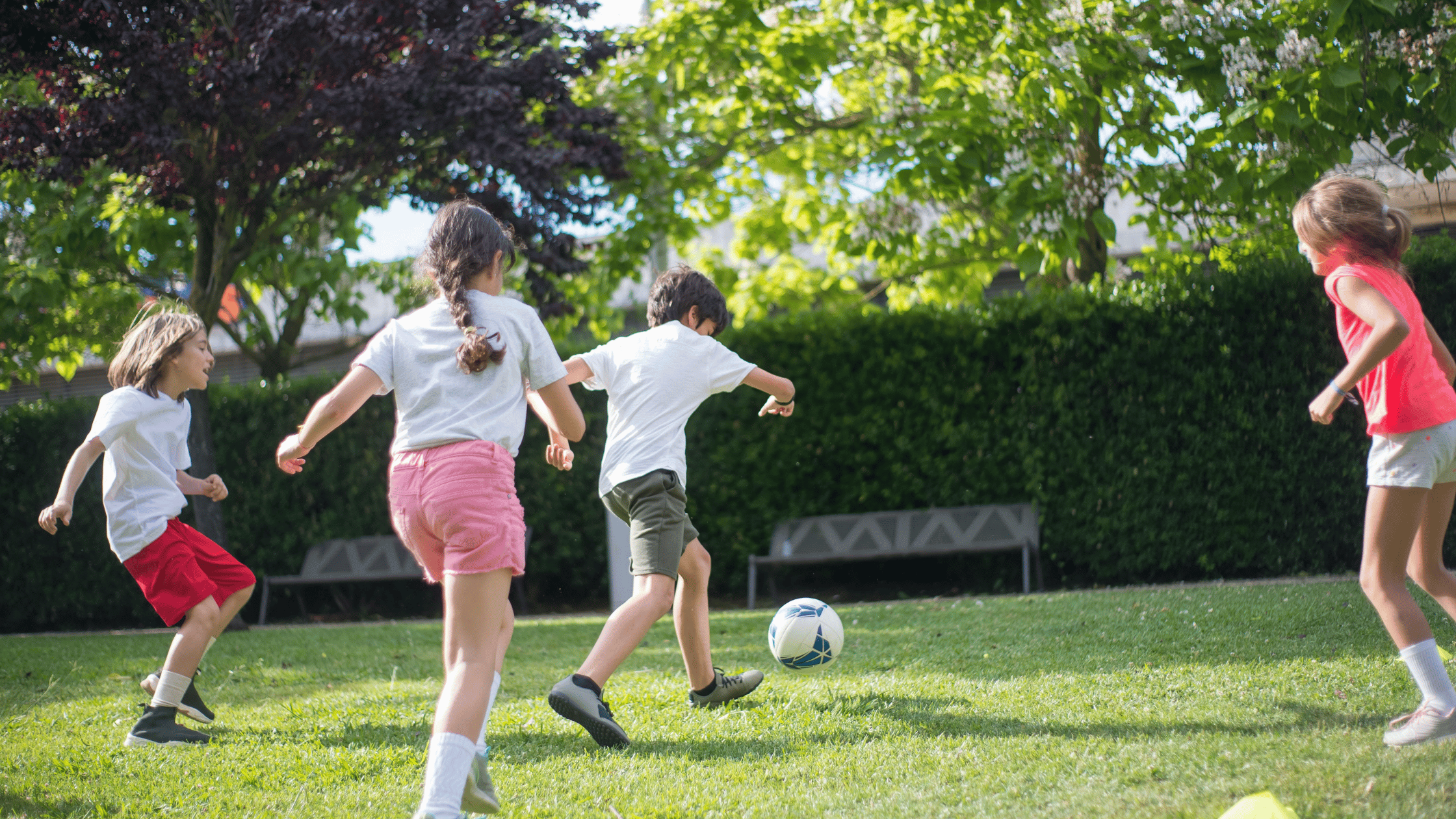
Varied movement calibrates the system. Barefoot on grass, uneven ground, climbing, catching, spinning, changing direction. The systems that coordinate balance and position, meaning the inner ear and the eyes and the sensors in the joints, calibrate against each other through varied input while a kid is growing. A kid who only runs straight lines on flat turf gets a narrow calibration. This is the real argument for multi-sport play over early specialization.
Movement itself changes the gut. Independent of diet. Exercise increases microbial diversity and butyrate-producing organisms in controlled human studies, and the effect fades when training stops.
The family version of all of this is one habit. Everybody outside after dinner. It loads bone, gets screens out of the melatonin window, feeds the butyrate producers, and gives the nervous system varied input. Four things at once, no supplements, no compliance battle.
What We Measure
Everything above is a reasonable hypothesis until somebody tests it in a specific kid.
Gut Zoomer shows the microbial picture. Which organisms are there, which are missing,whether the butyrate producers are present in meaningful numbers, and what the markers of inflammation and barrier integrity look like.
Organic Acids Testing shows the tryptophan story directly. Whether the raw material is being converted toward sleep and bone chemistry or diverted by inflammation and stress, whether the vitamins that conversion requires are holding up, and how the cellular energy machinery underneath it is running.
Balance and eye movement testing measures how well this nervous system is controlling this body. A kid whose posture collapses under fatigue is telling us something specific, and we would rather measure it than guess. This is the half of development that gets skipped. A frame that changes shape every few months has to be recoordinated continuously, and that coordination is trainable.
Together these answer a question most families have never gotten answered. Is this kid getting what they need to build, or is this a supply problem that looks like a talent ceiling?
Where to Start
The window is real and it does close. Growth plates fuse, the years of highest bone accrual pass, and what a kid built during that stretch is what they carry.
The good news is that most of what determines whether they reach their range is ordinary.
Dinner, daylight, sleep timing, how they play. And the same dinner that supplies your athlete supplies you, on a body with more accumulated wear and a thinner margin, which is why the families who change it together tend to get further than the ones who change one plate.
If you want to know what is actually happening rather than guessing at it, that starts with measuring.
Schedule an assessment for your athlete.

Dr. Justin Dearing
Ready to feel like you again?
* Your next step toward feeling better starts today. At The Dearing Clinic we make it simple to get started with care that truly fits your life. Book your visit now and let’s design a plan that restores your energy, relieves your pain, and helps you enjoy more of what matters most.