
Aging Well Means Staying Connected
Longevity tools track your body, but few address whether your brain and body are still communicating clearly. Here's why we treat the nervous system, not just the joint.


Aging Well Means Staying Connected
Why Our Manual Work Is Built for the Brain, Not the Pop
Key Points
- Longevity tracking tools (wearables, peptides, supplements) are useful but don't address whether your brain and body are still communicating clearly.
- Your brain constantly reads position, movement, and balance signals from joints, muscles, and the inner ear — when that signal gets noisy, the brain guards the body more tightly, and you feel it as stiffness and tension.
- Our adjustments aim to sharpen the nervous system's perception of movement, not just release a stuck joint.
- Sacro-Occipital Technique (SOT) works with the coordinated movement of the sacrum and skull, which helps drive circulation of cerebrospinal fluid around the brain and spine.
- Breathing mechanics (pelvic floor, respiratory diaphragm, neck outlet, and a membrane inside the skull) act as a stacked pumping system that supports this same rhythm — training the breath alone addresses only part of it.
- Visits typically run 15–30 minutes and combine manual work with modalities like acupuncture or myofascial release; meaningful change is often seen in 4–6 weeks, with about 12 visits for a bigger shift.
- We pair manual work with brain-based therapies (functional neurology rehab, neurofeedback, HBOT, ozone) so the nervous system learns to use the clearer signal once it's available.
We live in a remarkable moment for staying young. There is a gadget for every metric, a peptide for every pathway, a supplement for every aging marker. You can track your sleep, your glucose, your recovery, and your rate of cellular aging from your wrist. All of it is useful, and we use plenty of it ourselves. But there is one thing none of it addresses, and it is the thing that quietly determines how well you move and think as the years add up: whether your brain and your body are still speaking clearly to each other.
Here is what most of the longevity world misses. Your brain is not a passenger riding around inside your body. It is constantly reading position, movement, and balance from your joints, your muscles, and your inner ear, and it uses that stream of information to run everything from your posture to your stress response. Over time, that connection drifts. Not because anything dramatic happened, but because a body accumulates small restrictions the way a well-used instrument slips out of tune. Joints move a little less freely. Fascia thickens and tugs. The signal getting back to the brain becomes less accurate, and the brain begins to guard a body it can no longer read clearly. You feel that as stiffness, tension, and a body that no longer responds the way it used to.
This is why we believe aging well is not only about what you add. It is about staying connected. You can buy every tool designed to help you live longer, but if your brain and body have lost their clear line of communication, the tools are working on a system that has gone partly offline. Our job is to keep that line open, and occasionally to recalibrate it, so that everything else you are doing for your health actually lands.
Why Our Manual Work Is Different
A conventional adjustment is usually aimed at one thing: reducing a fixation. Find the stuck segment, release it, move on. The joint is the beginning and the end of the goal. We work toward something different. We adjust to improve your brain's perception of movement and of the body itself. The joint restriction still matters, but to us it is the means, not the target. Every technique we use is chosen because it sharpens the information the nervous system receives about how you move.
A standard adjustment aims to reduce a fixation. We adjust to improve how accurately your brain perceives your body's movement and position. The joint is the means. The nervous system is the goal.
Sacro-Occipital Technique and the Breathing of the Skull
Sacro-Occipital Technique is the clearest example of this approach, and it works on a level most people never learn about. Your skull is not a single sealed helmet of bone. It is a set of plates joined at seams called sutures, and those seams allow a small, rhythmic movement. Beneath them, cerebrospinal fluid circulates around your brain and spinal cord in a slow, steady tide, bathing the nervous system, delivering what it needs, and carrying waste away. This gentle motion has its own rhythm, separate from your heartbeat and your breath, and a healthy nervous system depends on it flowing freely.
The name Sacro-Occipital points to the two anchors of this system: the sacrum at the base of the spine and the occiput at the base of the skull. They are meant to move in coordination, and that coordination helps drive the circulation of fluid up and down the spinal cord. When the relationship between them becomes twisted or stuck, the whole rhythm is restricted. The subtle movement between the cranial sutures dampens. The fluid beneath does not circulate as freely. And the brain, which relies on that steady tide, loses some of the environment it needs to regulate well.
Here is where your breathing enters the picture, and where it connects to the work we do in our respiratory training. Your body has several diaphragms, not just the one under your lungs. There is the pelvic floor at the base, the respiratory diaphragm in the middle, the outlet at the base of the neck, and a tough sheet of connective tissue inside the skull itself. These are stacked pressure surfaces, and they are designed to move together with every breath. Each full inhale and exhale gently pumps fluid and pressure through the whole column, all the way up to the cranial rhythm at the top.
When one of those diaphragms is locked, the pump loses its leverage. A stuck exhale or a flared rib cage means the middle of the system cannot fully drive the movement. Old tension in the neck restricts the outlet. A twisted sacrum disturbs the base. The result is a breathing mechanism that no longer supports the cranial rhythm the way it should. This is why we sometimes see people who have trained their breathing well and still carry head pressure, jaw tension, and a nervous system that will not settle. The breath is one lever. The cranial and spinal mechanics are another. Free only one and you get partial results.
How We Structure the Work
Our goal is a visit that maximizes your time doing something useful, usually 15 to 30 minutes of good spine work. Sometimes that is acupuncture, muscle work, and spine work together. Sometimes it is manual work, stretching, and myofascial release, pulling stuck fascia off of nerves and freeing up joints in the process. When we do the good work, we usually need around 12 visits to make a big change. Many people choose to continue with a maintenance plan after that, but very often the most complicated conditions of the body and spine will change tremendously in just 4 to 6 weeks.
Why We Pair It With Brain-Based Therapy
We run this manual work alongside our other brain treatments, and that is on purpose. The manual work restores the movement and the rhythm. Then our brain-based therapies teach the nervous system to trust and use that better information. Functional neurology rehab retrains the reflexes that stabilize your gaze and head. Acupuncture supports the same regulation from another angle. Neurofeedback, HBOT, and ozone raise the brain's capacity to actually use coherent information once it is coming in clean. One without the other is half the job. Treating the body is not separate from treating the brain. It is imperative for it.
You cannot out-supplement a nervous system that has lost an accurate sense of its own body. First we restore the movement, the fluid rhythm, and the signal. Then we train the brain to use it. That is why the change holds.
So by all means, use the tools. Track your recovery, take the compounds that help, do the cold, do the strength work. We are right there with you. But make sure something in your longevity plan is keeping your brain and body connected, because that connection is what everything else is built on. Move well, stay connected, and the years take a very different shape.
Frequently Asked Questions
1. How is this different from a typical chiropractic adjustment?
A conventional adjustment focuses on releasing a stuck joint. Our approach uses the joint as a tool to sharpen the signal your brain receives about your body's position and movement, so the goal is nervous system communication, not just the "pop."
2. What is Sacro-Occipital Technique (SOT)?
SOT is a manual approach centered on the coordinated movement between the sacrum and the occiput (base of the skull). This coordination supports the rhythmic circulation of cerebrospinal fluid around the brain and spinal cord.
3. Why does breathing matter for this kind of work?
Your body has several stacked "diaphragms" — the pelvic floor, the respiratory diaphragm, the thoracic outlet at the neck, and a connective tissue sheet inside the skull. Each breath helps pump fluid and pressure through this whole column. If one diaphragm is restricted, the rhythm at the top is affected too, which is why breathing work alone sometimes leaves residual head pressure or tension.
4. How long is a typical visit, and how many will I need?
Visits usually run 15 to 30 minutes and may combine spine work with acupuncture, muscle work, or myofascial release depending on what you need that day. Many people see substantial change within 4 to 6 weeks, with around 12 visits often needed for a bigger, lasting shift. Some continue on a maintenance plan afterward.
5. Why do you combine manual work with things like neurofeedback or HBOT?
Manual work restores movement and rhythm in the body, but the brain still has to learn to trust and use that clearer information. Functional neurology rehab, neurofeedback, HBOT, and ozone are aimed at building the brain's capacity to actually use good signal once it's coming in. Doing one without the other tends to produce partial results.
6. Should I stop using my wearables, supplements, or other longevity tools?
Not at all. Tracking recovery, sleep, and other biomarkers, along with strength training and other longevity practices, all remain valuable. This work is meant to make sure your brain and body are communicating well enough that those other efforts actually land.
7. Is this treatment a substitute for medical care?
No. This content is educational and describes our approach to manual and brain-based therapies; it isn't a diagnosis or a replacement for care from your physician. If you have a specific health concern, it's best discussed directly with your provider.
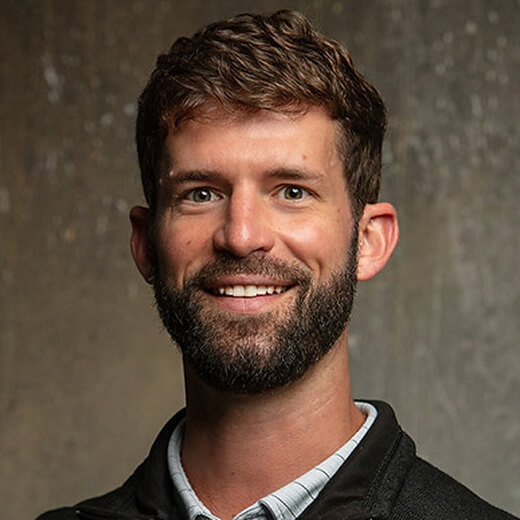
Dr. Justin Dearing
Ready to feel like you again?
* Your next step toward feeling better starts today. At The Dearing Clinic we make it simple to get started with care that truly fits your life. Book your visit now and let’s design a plan that restores your energy, relieves your pain, and helps you enjoy more of what matters most.