
A Recovery No One Expected — Now in the Medical Record
A former NFL player diagnosed with early-onset dementia and post-concussive syndrome has a documented recovery — now published in peer-reviewed medical literature. Cognition, brain networks, and physical health all measurably improved. Here's what the data shows and why it matters.


A Recovery No One Expected — Now in the Medical Record
Our first peer-reviewed case report, and what it says about what's clinically possible
A former professional football player came to us already diagnosed. Early-onset dementia. Post-concussive syndrome. More than two decades of repeated head and neck trauma behind him. He had reached the point where caring for his children and supporting his wife had become a daily struggle, and the trajectory he had been given ran in one direction only.
That is not where his story ended. His cognitive testing climbed from below-average into the average and above-average range. His brain networks moved substantially closer to normal. He lost more than 100 pounds while keeping his muscle. And his recovery is now documented in the peer-reviewed medical literature, with Dr. Justin Dearing as first author.
WHAT THE PUBLISHED DATA SHOWS
• Cognition rebuilt. Testing rose from below-average into the average and above-average range across processing speed, executive function, and memory-related domains.
• Brain networks normalized. The networks governing attention, focus, and self-control shifted markedly toward normal on repeat brain mapping.
• The body followed. More than 100 pounds lost with lean muscle largely preserved, alongside bloodwork that moved from immune exhaustion toward balance.
This is the milestone we want to mark, and we want to be plain about why it matters. A patient carrying a diagnosis considered irreversible showed measurable, objective recovery under our care, and we documented it to the standard independent reviewers require. That is not a small thing to put on the record.
A diagnosis that was supposed to be a dead end
He had not been overlooked. He had been diagnosed. Early-onset dementia is not a case of no one finding anything, it is a case of everyone finding it and treating it as a one-way road. The interventions available to him were built around managing decline, not reversing it.
We looked at the same patient and asked a different question. Not what to call the decline, but what was actually driving it, and whether any of it could still be moved. That question is the entire difference. A diagnosis names where a person has arrived. It does not, on its own, tell you how much of the underlying physiology is fixed and how much is still correctable. Almost no one measures the second part. So the story usually ends at the label.
Our model rests on one principle: we measure the systems others leave unmeasured, and we restore them in the right order.
What our model actually did
Rather than treating the brain, the gut, the metabolism, and the immune system as separate problems for separate specialists, we mapped them together. We looked at how his brain networks were firing, how his cells were producing energy, where his nutrient and neurotransmitter metabolism had been depleted, and what his gut was doing to his inflammation.
Then we rebuilt the system in sequence rather than all at once. First we calmed the fire, restoring the gut and lowering the inflammation feeding everything else. Then we returned the system's fuel through oxygen therapy, targeted nutrient and NAD support, and regenerative therapies. Then we worked directly on retraining the brain. The brain cannot heal until it has both the raw materials and a calmer environment to heal in. Once it does, the networks can come back online.
This is where our four disciplines work as one rather than in silos:
- Functional neurology — to assess and retrain how the brain operates.
- Neurocellular medicine — to restore energy production at the level of the cell.
- Neurofeedback — to help the brain relearn healthy patterns.
- Gut microbiome restoration — to shut down the inflammation traveling from gut to brain.
No single one of these explains the recovery. Working together, in the right order, is what made it possible.
What changed, and how we know
Because we measured him carefully at the start and along the way, the changes are not a matter of impression. His cognitive testing rose from below-average into the average and above-average range. His brain-network mapping showed his key networks moving substantially closer to normal. His bloodwork shifted from a pattern of immune exhaustion toward balance. His gut-barrier markers improved. And his body followed the same trend.
The diagnosis he arrived with said this only moves in one direction. The data told a different story. A large part of what looked like permanent decline turned out to be correctable physiology. When the energy, the inflammation, and the oxygen were addressed, the brain had what it needed to recover.
We are careful about what a single published case proves. This is one patient, documented in detail, not a controlled trial. But that is also the point worth sitting with: this is a documented, peer-reviewed instance of measurable recovery in a patient whose diagnosis was considered a dead end. That is something the field is told does not happen.
One documented case, a pattern we have watched for years
Here is what makes this publication meaningful beyond the milestone. It is the first time we have captured this on paper to peer-reviewed standards. It is not the first time we have seen it.
Over the past five years, we have repeatedly observed this same pattern across very different patients and conditions, people worn down by fatigue, brain fog, post-viral symptoms, and cognitive decline who had been told nothing more could be done. When we measured the systems others overlook and restored them in sequence, improvements tended to appear across many symptoms at once, because we were addressing the shared systems underneath them rather than chasing each symptom alone.
The published case is the documented version of what our team has been doing for years. That is exactly why it matters to us.
What this signals for the future of care
Most of medicine still waits for disease. It names a condition once it crosses a line, then manages it from there. But the decline that leads to that line is often measurable long before the diagnosis, and often correctable while it is still measurable. If you can see the loss of function early, and if you can still move it after a diagnosis has been given, then the label is a starting point rather than a verdict.
That is the shift this case points to. The body heals as a system, not as a set of unrelated parts. The future of care belongs to models that measure the whole system, respect the order in which it needs to be rebuilt, and track the results with real data. That is the work our clinic has committed to, and now it is part of the scientific record.
Read the study
The full peer-reviewed case report is publicly available in the Biomedical Journal of Scientific and Technical Research. We are glad to share it, and we are grateful to the patient who allowed his story to be documented so that others might benefit from it.
This case report describes the outcomes of one patient and reflects clinical observations from routine care. It is not a controlled trial and does not establish that any single therapy caused any specific result. Individual results vary. The named therapies are supportive and are not presented as cures for any condition.
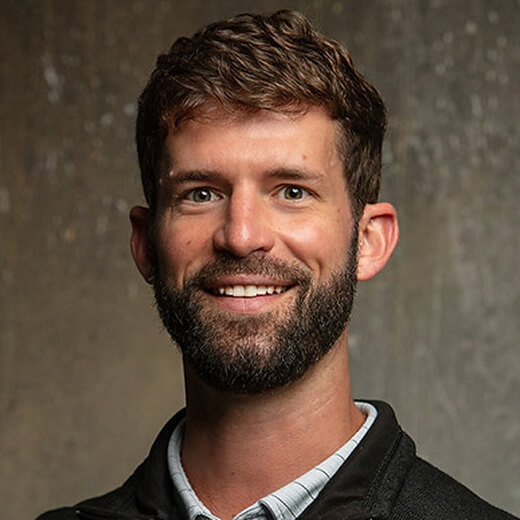
Dr. Justin Dearing
Ready to feel like you again?
* Your next step toward feeling better starts today. At The Dearing Clinic we make it simple to get started with care that truly fits your life. Book your visit now and let’s design a plan that restores your energy, relieves your pain, and helps you enjoy more of what matters most.